Year C Proper 12: What is the world coming to?

What is the world coming to? How many times have we had to ask ourselves that question over the past few months, the past few years? When I told people abroad on vacation where I came from, they had heard of Cleveland, Ohio, for all the wrong reasons. They knew about our worst stories, our most malevolent demons. They shook their heads and asked, “What is the world coming to?”

Despite Hosea’s rather blunt and uncomfortable language, I am glad that we read him this morning. He also is wondering what his world is coming to, his world being the northern kingdom of Israel, its capital Samaria, under threat from Assyria and falling into decadence and decay from the inside out. Like the other prophets, like Jesus, he calls his people to repent and return to God, to call upon God’s mercy in the face of the worldly judgement that is about to befall them. He does it in an unlikely manner, living his life as a parable, a prophetic action. His wife, his children all are material for his prophecy.

I am not sure that Hosea’s story is, in fact, strictly autobiographical. Did he really seek out a woman of ill-repute to marry, did he really name his children Unloved (Lo-Ruhamah) and Not Mine (Lo-Ammi); did he really call his wife a whore? Or are they a story he tells; did he live the parable piece by piece or make poetry, prophecy out of hints and intimations in his life to make it speak more clearly to his people of their plight? We will likely never know. Either way, Hosea’s story tells how faithlessness, how turning away from the love of God and godly love for one another leads to family and community break-up, disillusionment, disgrace and disenchantment; how it leads ultimately to despair. How low do you have to go before you name your children Unloved and Not Mine? What is that world coming to?

And yet, following the pattern of the prophets and of the psalms, Hosea ends this section of his story by remembering God’s mercy, in which we hope. The ones who were named Not My People are now called the Children of God. In the next couple of verses, which you can look up at home, the one who is called Not Mine is now called Mine (Ammi), the one who was called Unloved is now called Loved (Ruhamah).

Whatever Hosea’s world is coming to, it never runs out of hope in the living God who loves it and will not let it fall completely into despair.

When his disciples ask Jesus how to pray, he teaches them to pray first not for their own needs or will but for the will of God to be done on earth; for God’s kingdom, which Jesus has preached since the start of his ministry, to come near, to be established.

When Jesus teaches his disciples to pray, he talks to them not about individual prayers for salvation and success, but using the language of us and we, he tells them to pray first to God as a father, as one with whom they have a living relationship. He tells them to pray to God as one who is holy, set apart and sacred above all others. He tells them to pray that God’s reign will be established in all the earth, because therein lies our hope. From that hope comes the assurance of bread sufficient to the day, of mercy given and shared, of assistance in times of trial, strength and hope in the days when we wonder what the world is coming to.

About eighteen months ago, in the wake of the Anthony Sowell trial, Bishop Hollingsworth went on a local radio program to talk about the tagline you have most likely seen and heard about the place, “God loves you, no exceptions.” In the course of the conversation about the difficulty of relating this theology to a notorious serial killer, the Bishop said this,

“I don’t need to know what God intends for you or me or anybody else after this life. What I do need to know is what I can do to either create heaven or create hell in this life.”[1]

When we pray, “Your kingdom come,” God replies by inviting us to become agents of heaven in this life, to bring that kingdom closer, to open the doors of heaven to those who are facing hell on earth.

I think that the detail of this week’s news which most disturbed me was the suggestion that the man charged with multiple murders in East Cleveland had set out to emulate the actions of a murderer, to follow in the footsteps of death. The idea that a man could wander so far from the path, could be so lost, be led so far astray as to place his expectation, his desire, his hope in the last place that hope is to be found was both breathtakingly wrong and profoundly sad. When serial killers become role models, what is the world coming to?

And yet, if God can resurrect Jesus from the dead, God can restore our lives in the living of them. We are never beyond hope. We proclaim God’s love as a shout of light in the darkness, as a beacon of hope even while the wildfires burn. We know that we are falling, but we know that God never fails.

So what are we to do about it? How do we open the doors of heaven to those facing hell on earth? Hosea relented on the names of his children; wisely, he realized that he wanted them to grow into a relationship with God, not out of it, that naming them with hope – Child of Mine, Loved – was more likely to win their hearts for good than naming them out of anger. What chance the child whose name is Unloved?

How are we naming hope in our communities, how are we opening the doors to heaven for those around us? Where are we having conversations about God, about mercy, love and justice, about hope and heaven? Where are we acting on our own petitions, “Hallowed be your name, your kingdom come”? Bumper stickers are not enough. When we call God our father, we acknowledge that all of God’s children are our brothers and sisters; we are in relationship with them, and we need to engage with them honestly, and intimately, and hopefully. We need to be involved in our communities, not to abandon them to despair but to do the hard work of persisting in hope, whether it’s through community activism, or through visiting or volunteering, mentoring or remembering to tell a neighbour, I am praying for you. And by the way, God loves you.

I am planning to talk to some of our neighbours in the Lakeshore Ministry group and beyond about starting a series of prayer walks in our own neighbourhoods, reclaiming a place for prayer in our communities, opening the doors of heaven right outside our own front doors. I’ll let you know once the plans are in place and I hope that you’ll join us as you are able – let’s proclaim the kingdom of God even as we pray for its completion among us, even here, even in Euclid and in East Cleveland and wherever its hope is needed.

After he taught his disciples the prayer, Jesus went on to tell them a couple of stories about persistence, because he knew that the times of trial would come, and that courage would be needed to carry on in the faith that God’s kingdom is drawn near. Far be it from me to suggest that a few meetings and prayer walks will make everything right in our cities overnight. Our recent trials – here in the north and elsewhere, in Florida and the south – continue to remind how far we still have to walk in the way of the cross before we come to a place of peace.

Still, as Hosea realized, naming our hope will carry us further than living out our anger and our fear. Renaming our future as Belonging to Us and Beloved will open more doors to heaven than the alternative.

So I invite you to pray with me now, for the coming of God’s kingdom, that God’s will might prevail here on earth and open our lives to the peace and joy which is in heaven, in the words that Jesus gave to his disciples:

Our Father …

Posted in lectionary reflection, sermon | Tagged , , , , , , , , , , , , , | Leave a comment

Origami relationship

If I fold the map
just right, you are close enough
to hold at arm’s length.

Posted in poetry | Tagged , , , , | Leave a comment

Martha, Mary and the midwife’s advice

Here’s how I’d like the story to go:
Martha: lord, do you not care that my sister has left me to do all the work by myself? Tell her then to help me.”
Jesus: “lads, Simon, Andrew, James, Whatsyername, you lot in the kitchen and make yourselves useful! Martha, why don’t you join us?”

Of course, Martha would have been far too worried about the sons of thunder breaking her best teapot to relax, so maybe that’s why, instead, Jesus shook his head gently and affectionately:
“Martha, Martha, you are worried and distracted by many things; there is need only of one thing.”

We might guess from his words on other occasions that he is referring to love. Martha’s method of loving is a little stressed and scattered and distracted; but she does love Jesus enough to tear her hair out making hospitality for him. Mary loves him too, in her own way, and that will not be taken from her, any more than Martha’s frenetic love will be changed and channeled until she is too tired to take any more and sinks down next to her sister at Jesus’ feet.

That said, I am reminded of one of the best pieces of parenting advice that I received from the midwife teaching our first-time mothers’ prenatal class; she could have preached this as a sermon this morning; she could have whispered it to Martha:

On a sunny day, when the park is pretty and the baby is awake, it is always ok to leave the washing up for later and go. Do not waste an opportunity to enjoy the day, to enjoy one another, to grow in mutual delight.

The dishes will always wait.

Posted in lectionary reflection, sermon preparation | Tagged , , , , , , , | Leave a comment

Ordnance

Digging trenches, sunken defences
against flood and farm-fouled run-off,
a discovery gives pause.
Once the soldiers ran these cliffs,
looking for invaders, boats by night,
enemies creeping up with the tide.
They left behind a hand grenade,
souvenir of suspicious times
stumbling the head-scratch builders.
Bomb disposal drives away pleased,
three young men in army fatigues –
descendants of the defenders?
Who will find the seeds we now sow,
overgrown among the weeds,
reminders that the pursuits of war
yield grudgingly to peace?

Posted in poetry | Tagged , , , , , , , | Leave a comment

Seven years

Seven times seven
years married, seven years past;
a rose remembers.

Posted in poetry | Tagged , , , , , , | Leave a comment

Love your neighbour/Stand your ground

A reflection on three little words: Love your neighbour
and three more: Stand your ground.

Stand your ground: refuse to yield to the insidious isms of the age.
Stand your ground: let love outweigh fear, pity dominate over prejudice, mercy over mischief.
Stand your ground: let the words of the Master drown out the words in your head that just sound wrong.
Stand your ground: stop. stand still long enough for second thoughts, a second glance; maybe the sight of a child of God will blur away first impressions.
Stand your ground: when the weight of the cross bears you to the ground, stand up, carry on, grim in your determination to love them to death.
Stand your ground: Simon, Samaritan, each risked helping a stranger in need, fallen under the heels of others.
Stand your ground: lift your voices, women of Jerusalem, women of Florida, women of Newtown and Chicago, refuse to be silenced by those embarrassed by your grief.
Stand your ground: let revenge, retaliation pale in the face of your fierce and final mercy.
Stand your ground: when you fall beneath the weight of the cross, stand up, carry on, relentless in your love.

Posted in meditation | Tagged , , , , , , | Leave a comment

Hollow trees

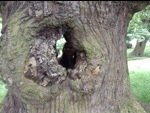
We went to the park where we used to play back in the day when we were small; we would run ahead of the parents and hide in the hollow trees that littered the way, brown and green side by side, growing even after they had been torn apart, their bark exposed on the insides. We would snuggle into their crevices like an embrace, an abandoned nest.
They have been stripped one by one of their lives and their family ties, they have slipped away and we stand around the outsides of the family tree without a centre, with a hollow core, never having learned to lean in.
We went back, and the trees still live against the odds, against all appearances they thrive, hollow to the core but reaching for the skies, centuries in the making and strong with age and the tempering of time, a living lesson in endurance.
Do they remember us? Do they remember those we walked with before?

20130710-234442.jpg

20130710-234548.jpg

20130710-234633.jpg

Posted in other words | Tagged , , , , , , , , | Leave a comment

Year C Proper 9: Independence, interdependence, and discipleship

Some of you had the experience three or so years ago of hosting the Bishop’s Bike Ride as it came through town. On any given evening on the trip, thirty or so saddle sore riders roll into an Episcopal church driveway looking for a shower to wash away the dust of the road and the sweat of the ride; food, lots of food, oh so much food after spending lots of energy chasing down hills whilst wasting precious breath talking, teasing and laughing as they go; and a homely bed to land in to refresh themselves before doing it all over again tomorrow. I was riding the first couple of days of this week’s ride; we set out from Perrysburg on Tuesday morning early, and rolled into the camp ground at Wakeman for the diocesan picnic at lunchtime on Thursday; that’s when I took my leave ready to come and rehearse a wedding here Friday for yesterday’s celebration, while the others cycled on to Norwalk, Findlay, and back to Perrysburg yesterday.

Of course this gospel was in the minds of those of us who preach, when we arrived at a stranger’s front door to accept whatever hospitality they might offer us. When we read the instructions given to the disciples, we might think, ok, travel light, live off the land, hope and trust in the kindness of strangers; we read words like “sandals” and we conjure up a romantic image of the Holy Land, rural and easy to navigate, with food growing by the roadside for the eating, a pleasant climate in which to walk and sleep under the stars if need be, “summertime and the living is easy.”

But the reality for these disciples was not as rosy. They were travelling in occupied territory. Think about the checkpoints and the random acts of violence, the distrust and suspicion with which different people living uncomfortably close experience in that region today; it was not so different in the disciples’ time. It was dangerous to go to the wrong town, to the wrong house, take the wrong road, and for the traveler far from home, few guides to tell which was the path to peace and which the deadly path. If it was dangerous in the towns, it was just as difficult out in the country, where bandits waylaid the unwary, and wild animals hunted the weak, lambs were stolen by wolves.

In the verses that we missed out of our gospel reading (Luke 10:11-15), Jesus pronounced a curse on those who would fail to protect his people in their journey: “I tell you, on that day it will be more tolerable for Sodom than for that town.” The commandment to hospitality was one of the foundations of the Jewish faith, because without it, the stranger and the traveler was toast. The sin of Sodom was exactly that failure to protect and care for the stranger in need, which is why Jesus brings it up here; it is nothing if not the epitome of bad grace and failed hospitality (Genesis 19).

So the seventy or so people that Jesus sent out on the road might have had authority over snakes and scorpions and demons and diseases; but they were also at the mercy of their neighbours, those who would receive them and offer them hospitality on the road, and Jesus bids his disciples submit to these hosts, not to pick and choose, but to receive their ministrations with good grace and humble thanks, offering them words of peace and the good news of the gospel.

Maybe Jesus thought that, in the midst of their victory over the powers of darkness, the disciples would need reminding that they, too, were ever dependent upon the Lord of Light for their life, their safety, their eternal salvation. “Nevertheless, do not rejoice at this, that the spirits submit to you, but rejoice that your names are written in heaven.”

We all from time to time worry about keeping our independence, about staying in control of our own lives, our finances, our homes, our bodies. We none of us enjoy being dependent upon others; we use phrases like “being a burden,” or “not wanting to be beholden” to anyone else. The fact is that we are beholden to one another; without one another we wouldn’t have a church. Without one another, we wouldn’t have a town, a country, any kind of community. Even though we just celebrated Independence Day, we know more than ever these days how interdependent we are on one another around the world. We cannot turn our backs on those living across the sea, because they supply many of our own needs. We need one another to live and move and have our being. None of us is as independent as she thinks, and none of us would be anything at all without God. Whatever authority we own, however powerful we think we are, we are all under the authority of the living God.

Naaman wanted to control his own cure. As much as he wanted healing, he wanted it on his own terms, and he hated having to submit to the instructions of Elisha. The disciples were used to having their own way – Peter, Andrew, James, John, they were all fishermen, with their own boats and nets and employees; they were used to having authority, but they were not used to submitting to the kindness of strangers, to being dependent upon others for their livelihood and their wellbeing. But in his letter to the Galatians, Paul writes, “Bear one another’s burdens, and in this way you will fulfil the law of Christ. For if those who are nothing think themselves something, they deceive themselves.”

Jesus sent out the disciples to preach peace, to bring good news, to spread the word about the kingdom of God drawing near, to cure sickness and drive out demons; but he was also training them: training them in humility, in grace, in empathy, in mercy, in kindness and hospitality. He was teaching them how to love one another by receiving as well as giving that kindness. He was teaching them the authority of the cross, that power that is so gentle that it would die for us.

One of my colleagues on the bike ride likes to see how it illustrates our being the church: we feed the riders, offer hospitality; we help one another out on the road; we come together to journey forward, to pray, to share; the support drivers offer good cheer and occasional rescues; everyone is welcome to go at their own pace, and as far as they can; there is no unfriendly competition, and plenty of mutual encouragement. There is also that element of submission to one another, the stepping over the threshold of a host’s home, receiving the kindness of strangers with complete vulnerability, with nothing to offer in return but gratitude. It is, in the end, the way of the cross, a journey which demonstrates the power of life over death and disciples over demons, God’s healing over the decrepitude and decay of the world, but one which does so with humility, vulnerability, with sacrifice. We walk the way of the cross with the remembrance that none of us travels alone, each of us is dependent upon God for our authority, our power, our independence.

We, like the disciples, have the words of life to share with the world; and it is our service to the world, not our dominion over it; our sharing of our lives, ourselves, our interdependence, our faith, that brings those words to life. Amen.


Posted in sermon | Tagged , , , , , | Leave a comment

Year C Proper 8: Don’t look back

There are some hard words from Jesus in this passage:

“Let the dead bury their own dead.”
“No one who puts a hand to the plough and looks back is fit for the kingdom of God.”
“The Son of Man has nowhere to lay his head.”

What’s harder is that these sentences are told to people who are keen and eager and declare themselves ready to follow Jesus wherever he goes. But Jesus has set his face towards Jerusalem, and he knows, or at least suspects, what will be demanded of him, and of those around him. He needs these would-be disciples to be sure, before they leave everything behind them, that they are truly willing to endure whatever may befall along the way.

These are not words of condemnation. In fact, many will look back, even those whose hands have been at the plough since the beginning. Remember Simon Peter, who was among the first called, who has been with Jesus throughout his ministry and mission, who will deny even knowing Jesus when the time of trial comes, yet Jesus continues to love him and to greet him after his death and resurrection with a kiss of peace, with words of commissioning. These are not words that condemn our doubts or our fallings and failings, but which demand that we understand the gravity of the commitment that we are making when we say that we are followers of Jesus.

I know that I am not the only preacher this morning who looked at this admonition: No one who puts a hand to the plough and looks back is fit for the kingdom of God – and thought of Nelson Mandela, as the world essentially waits at his bedside and prays. He put a hand to the plough a long time ago, hoping and praying and, yes, fighting for freedom. Because he refused to accept that the kingdom of God, the rule on earth was one that could discriminate against him and his family and his friends for the colour of their skin, which could segregate and separate them from their true place in society, which could demean their dignity and undermine their humanity; because he put his hand to that plough, he endured trials and tribulations that would have broken most of us; his eyesight was permanently damaged by forced labour in the blinding sun.

He spent twenty-seven years in prison, eighteen of them on RobbenIsland in forced labour.[1] Yet when he emerged from prison, he did not look back. His hand still at the plough, he did not look back, and looking forward he helped to lead his country into a new age, not without its problems, not yet the totally new creation of the kingdom of God, but leaps and bounds along the way from where it was.

With his hand at the plough, he did not look back in anger. After twenty-seven years of imprisonment and ill-treatment, he did not look for revenge; instead his government commissioned Archbishop Desmond Tutu to chair the South Africa Truth and Reconciliation Commission, a remarkable endeavour to heal the people, to salve the wounds of division and oppression, by means of honesty and understanding, confession and candour, and the opportunity for forgiveness.[2]

James and John wanted Jesus to call down fire from heaven to destroy those who had dissed them, but Jesus rebuked them. What must it have cost Mandela personally, to make those choices not to look back, neither to give up nor to go back and rewrite the fight as one that he had won by force?

In his book, God Has a Dream, Desmond Tutu makes the observation that, “Our world is better because of the life and witness of a Mahatma Gandhi, of a Mother Teresa, of an Oscar Romero, of a Nelson Mandela.” He is too modest to add his own name to the list, although many of us would. He goes on,

“They are notable examples of the altruistic spirit that does things, good things, heroic things, for the sake of others, for the sake of the world, for the sake of posterity. Some may way that, by their example, they show us what the rest of us lack. But behind every Gandhi, every Mother Teresa, every Romero, every Mandela, there are millions of people who are living lives of love and heroism.”[3]

Jesus did not use hard words with his would-be followers to show them up, to tell them what they were lacking. He used them to challenge, warn, to remind them that in following him they were making a commitment, to proclaiming and promoting the kingdom of God; and that has always met with resistance. Proclaiming God’s love and forgiveness to all people has always been met with challenge.

We know for ourselves that our commitments work best when we don’t look back at what might have been, but deal with the world as it is, learning from our missteps, but not trying vainly to retrace them; taking it one day at a time; whether in our commitment to our marriages or our primary relationships; to our children; or to the spread of justice and equality, equal dignity; just treatment.. We’ve heard a lot from the courts and from the state this week about racial justice, marriage equality, equal access to education and the benefits of living in America.

Our neighbours, Dean Tracey Lind and Canon Will Mebane, released a joint statement through the Cathedral website this week, reflecting on the news out of the Supreme Court. Describing themselves as “a white lesbian from the north and a heterosexual black man from the South,” both products of the sixties, they said, in part:

We are elated by the Supreme Court’s ruling that the Defense of Marriage Act (DOMA) is unconstitutional. We look forward to the resumption of same-sex marriage in California and are committed to working for marriage equality in Ohio. At the same time, we are disappointed with the court’s decision regarding The Voting Rights Act. The court’s ruling on affirmative action leaves us and others confused. We would have preferred a more definitive and clear determination in support of correcting decades of discrimination against minorities. These decisions remind us that it is incumbent that we remain vigilant in working to promote God’s kingdom on earth.  (http://trinitycleveland.org/blog/2013/featured-news/joint-statement-on-supreme-court-rulings/)

Remain vigilant; be steadfast; don’t look back.

When we make a commitment, personal or societal – and they are all spiritual, if we make them in the light of God, with the prompting of prayer – when we make a commitment, we know that we are called to walk forward with it, to stay with it, to steer it straight and true, not looking back, neither giving up nor looking for revenge, but moving forward from where we are, celebrating the successes, learning from the setbacks.

And there will be setbacks. Jesus knows there will be setbacks. He even told Peter exactly how many times he would deny him, and when. But Jesus has been there before us, and he will walk with us, as long as we hold the plough steady, and aim for the kingdom of God.

Jesus set his face towards Jerusalem. With no place to lay his head, no tender mercies to attend him, he put his hand to the plough and he did not turn back. Even in the garden, when he prayed with blood and tears, he did not turn back. Knowing what it would take to bring the kingdom of God, to save us from our trials, to bring us into the light, he faced the darkness and he did not look back. Even as he stepped forward into the land of the dead, he did not look back, but he kept right on going through it and into the light, into the light of eternal life, the resurrection and the glorious ascension, that we may come at last with him to that place where he has gone before, fit for the kingdom of God.


[1] Desmond Tutu, with Douglas Abrams, God Has a Dream: A Vision of Hope for Our Time (Doubleday, 2004), 72-73

[2] Ibid, 10

[3] Ibid, 115

Posted in sermon | Tagged , , , , , , , , , , , , , | Leave a comment

Year C Proper 7: Angels and demons

In some ways, the man healed of demons in the Gerasene region of Galilee is the first preacher of the Christian gospel. He gets it – he really does! Even after years of torment at the mercy of a legion of demons, he recognizes for himself right away what it took others years to find out, what some never realized.

 Jesus sent him on his way, saying, “Return to your home and declare how much God has done for you.” So he went away, proclaiming throughout the city how much Jesus had done for him.

This man recognized that in Jesus’ actions, he was seeing the work of God. He proclaimed how much God had done for him by sending him Jesus, by living through Jesus and coming to him in human form, yet such a form that had power even over his demons.

The people of the city had cast him out and tied him up and left him to the devices and dementia of his demons. They had put him out of sight, him and his demons, out of sight and out of mind. Perhaps, he was a scapegoat for them. Perhaps that it how he ended up with so many demons, a legion of them, because he was carrying the burden for the whole city, while it went on its merry way without thinking about him, except when he got free, except when they were afraid he might come back, replete with all of their own demons.

The term, “scapegoat,” referred originally to a literal goat, on whom was heaped symbolically all of the sins of the people, and which was driven out, so that the people could be rid of their guilt and cleansed of their lingering sin.

This man had become the scapegoat for the city, carrying their demons so that they did not have to confront them for themselves.

I don’t know what you think about demons. Maybe you read them as real manifestations of evil, shadowy but personal, like the characters in C.S. Lewis’ jokey but ultimately chilling, The Screwtape Letters. Perhaps you see them as a metaphor for the temptations and mini madnesses that plague us, or maybe you consider them to be the myths and folklore of an outmoded world view; we know better now. I don’t know what you think about demons, but whatever we think that they are, Jesus knew them when he saw them. He saw the havoc they could wreak on a suffering soul, and he had such compassion for his people, his love drove out their evil.

Of course, now that the man was restored, there was work for the community to do. How would they reconcile themselves to a life in which he was no longer the dumping ground for their own demons? How would they overcome their fear of him, which had grown over the years with the stories and the children’s cautionary tales that they no doubt told; how would they sit down with him at dinner? How would they listen, how would they hear from him the good news of what God in Jesus Christ had done for him? Was it good news for them, too?

It is a shame that the people of the city didn’t see it for themselves, at least at that moment. It’s understandable, perhaps, that they were unable to look beyond the loss of income that the pigs represented, the loss of the status quo that the healing of their neighbour meant, the loss of their own security, based as it was on keeping their scapegoat beyond the walls of their own lives. But what might they have gained, if they had been able to summon up the courage to ask Jesus to stay?

We see this played out over and over in our own communities, our own families. Even when we complain constantly about someone’s behaviour, at heart we don’t want them to change, because that would mean engaging with them wholeheartedly, without the excuse to keep them at a distance. We say that we welcome back the prodigal with open arms, but really we are just waiting for them to run off again. We say things like, “Better the devil you know,” to avoid confronting the devils we know only too well and demanding hard change. We project so much of our own guilt and our own rejection and our own insecurity onto others, so that we don’t have to deal with them ourselves. We each have our own personal, family, community scapegoats.

And then Jesus comes along and turns everything upside down.

This story demands of us hard questions, honest answers. Whom do we scapegoat? Who would we rather keep at arm’s length, in case they convict us of our own guilt, in case we see our own demons reflected in their eyes? Where do we draw the line at accepting God’s transformation in our lives? When do we ask God to leave us alone, because we, the people of the city, are seized with great fear?

The man who was healed had no fear left in him, because he had already suffered a version of hell on earth, tormented and tortured by demons, driven beside himself, abandoned and despised. Yet love had driven out his fear along with the demons: the compassion of Jesus had healed him from his misery, and he knew, he knew that such power, such mercy, such love came from God. He knew it better than anyone, because anyone who has fought with demons has seen God’s angels fighting alongside them, wielding that compassion and mercy like a sword.

I still don’t know what you think about demons, but Jesus knew them, and they knew him.

And so, out of the compassionate actions of Jesus, a new Christian was born; an unlikely convert, but one who saw that in the life of Jesus, the eternal life of God was offered; that in the mercy Jesus showed, God’s steadfast faithfulness shone.

Jesus said, “Return to your home, and declare how much God has done for you.” So he went away, proclaiming throughout the city how much Jesus had done for him.

I wonder if he heard, in later years, about the trumped-up trial in Jerusalem, about the cruel crucifixion and the rumoured resurrection, that quiet revolution that overcame the power of evil and death. I wonder if that was the moment at which he turned to his neighbours, the people of the city, and said,

“That, there. That is how much God has done for us.”

Posted in sermon | Tagged , , , , , , , , , | Leave a comment