
Year A Proper 20: Jonah and anti-Jonah

Poor, petulant Jonah. If he couldn’t give the Ninevites hell, he wanted to at least give them purgatory.

I’ve done all of this work, he said, endured all of this drama: the running away the wailing and gnashing of teeth, the getting thrown to the whale with its gnashing teeth, swallowed from the sea and spit up on the shore. I’ve worked hard for my redemption. And now I come here and say “Repent” and they put on a bit of sackcloth and ashes and you forgive them. I knew you’d do that. It’s just what you would do. Forgive them.

Rabbinical commentaries suggest that some of the reasons Jonah ran away from the assignment that God had given him were the fear that if the Gentile people of Nineveh repented, it would make the Israelites look bad, sitting back in their own sin. Or if the Ninevites repented and God forgave them, after Jonah had threatened them with hellfire and destruction, it would make Jonah look bad, like a false prophet full of empty threats. Jonah was afraid to rescue Nineveh from destruction, because he was worried that their redemption would reflect poorly on him.

I am not sure that Jonah had thought it all through. It would be difficult to paint a less sympathetic portrait of a prophet if you tried. First of all, faced with the Mission Impossible challenge, he refused to accept it. He tried running away and hiding in the belly of a trading boat in order to escape from the eyes of God, which was dumb. He put the rest of the ship in danger, not acknowledging his part in the storm that surrounded them, until they cast lots and found him out. Even then, the sailors tried to save him, to row the ship to shore, but they were faced finally with the choice to give up Jonah or give up the ship. They didn’t give up the ship.

“And the Lord appointed a great fish to swallow up Jonah, and Jonah was in the belly of the fish three days and three nights.”

Tradition has it that the fish was created out of the waters of chaos in the first six days described by Genesis specifically for this purpose: to swallow up Jonah until he should sing his song of repentance and be spit up on the shore and sent out once more to warn the city of Nineveh of the wrath of God.

Finally, God tells Jonah a parable, by way of a tree. “Shall I not be gracious to those whom I have made?” asks God. It’s almost like the cosmic version of God telling Jonah a bedtime story about God’s love for all of God’s people; the “Guess How Much I Love You” of divine interventions:

“I love you to the ends of the ocean. I love you to the depths of the sea. I love you to the belly of the whale and back. I love you more than this tree.”

 20140920-203007.jpg

Several centuries later, Jesus is telling a parable to his disciples about justice and grace. Jesus is kind of the anti-Jonah. Jesus had no hesitation in calling those around him to repentance. Jesus, like Jonah, once slept in the belly of the boat while the storm raged around and the other sailors feared for their lives. Jesus once slept three days and nights in the darkness formed before the beginnings of the world, and came back to the land of the living. Jesus knew that the storm was raging over him, and he stilled it. Jesus knew that death had no hold on him, and he destroyed it.

Now, Jesus tells a parable.

It is a parable for people like Jonah, like us, who don’t always like the way that God messes with our sense of justice and fair play. We don’t always like that God loves others as much as God loves us. Jesus told the Pharisees that the tax collectors and the whores would get into heaven ahead of them – my guess is that we would be as insulted as they were to hear the same thing told to us.

But look again at those labourers, the ones that were called up last, who only worked an hour or two and got the same gracious day’s pay, a living wage; they didn’t get off lightly. They had spent all day in the marketplace, under the hot sun, waiting, afraid, and ashamed, frightened that they would not be able to feed their family tonight, ashamed to go home.

One missed the job because he didn’t have his own equipment. One because his leg was lame and he missed the bus to market. One was, frankly, the wrong race, colour, ethnicity for the majority of the employers in the marketplace. One failed the background check. One was too old, another too young, one was overqualified, one had dropped out of school and had no certification. One didn’t have the right immigration papers to work. One couldn’t manage the hours around her childcare. One fell asleep after coming right off the night shift to look for a second job. They were the children left till last when the popular people got to pick teams.

 20140920-202108.jpg

The city of Nineveh repented, from the greatest of them to the least of them. Even their king wore the same sackcloth and ashes. Even their cows observed the fast! It was the system, it was the city that repented of its evil ways.

I wonder what that would look like in our context: for our system to repent and recoil from injustice and idolatry. What would happen if we were to see our fast food workers, our Walmart workers, those weary for a living wage, the ones left till last, the ones left with the least in our marketplaces; what if we were to read them as a parable, hear them as prophets? What if fair play meant that everyone got fed, if we were as gracious to one another as God is gracious to each of us, each according to our need.

I wonder what stands in our way.
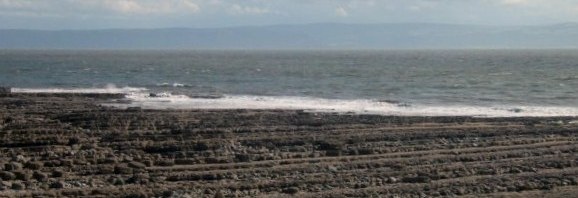
 nash-point3

Whatever that may look like, at the end of it all, at the end of all of our drama, our running away, our storms and our shelters, our success and our shadows and all of our stories; when all is said and done and we are swallowed up by the darkness of death, God will not let us go. God will extend to us the grace that we need, each and every one of us. God’s loving kindness and mercy endures for ever. And if we still aren’t ready, if we still don’t get it, if we still resist God’s grace, for ourselves or for another; if we are still following Jonah instead of Jesus, then perhaps God will sit us down one more time and tell us a parable, a story of God’s grace: Do you know how much I love you?

Posted in sermon | Tagged , , , , , , , , , , | Leave a comment

The Gospel according to Jonah

In the form of a bedtime board book:

I love you to the end of the ocean.

huntington beach 020

I love you to the depth of the sea.

IMG_3078

I love you to the belly of the whale and back.

20140920-203007.jpg*

I love you more than this tree.

20140920-202108.jpg

* Jonah and the Whale, Sarum Antiphoner, 1400, Ransworth Church, Norfolk, England, Printed and Published by Jarrold & Sons Ltd, Norwich

Posted in sermon preparation | Tagged , | 2 Comments

Seeing the light

On the carriageway out of the castle
about halfway down, the tunnel bends sharply.
They told us that a dray horse,
poorly schooled in perspective,
would find it hard to believe that
the tight, bright portal at the end of the driveway
would admit its escape.
Poor, simple soul, it would rather trust
blank walls and blind corners
than see light at the end of the tunnel.

Posted in poetry | Tagged , , , , , | 1 Comment

Year A Proper 19: forgiving

You remember the Joseph story:

“Way way back many centuries ago, not long after the Bible began…”

Jacob was the grandson of Abraham, and the father of the twelve tribes of Israel – in fact, it was Jacob who was given the name “Israel.” Unfortunately, favouritism was well in fashion in the Bible, and Jacob made no secret that he favoured Joseph, the first child of Jacob’s favourite wife. Joseph unfortunately absorbed all of his father’s fondness and allowed it to make him proud, puffed up; he lorded it somewhat over his brothers, relating dreams of them bowing before him and the like. The brothers, as you can imagine, didn’t like it one bit. In fact, they threw Joseph in a pit, then sold him to slavers, and told his distraught dad that he was dead.

Joseph went to Egypt, and after a story worthy of an afternoon soap opera, or even a Broadway musical; after a story filled with ups and downs and dreams and dilemmas, Joseph ended up in charge of the Pharaoh’s stocks and shares, with the power to give or withhold life from any suitor when famine fell across the region. When his brothers came begging for food, Joseph had the perfect opportunity to take his revenge – but fortunately, he recognized instead the opportunity for mercy, forgiveness, reconciliation. All of which didn’t happen at once, but he worked through it and in the end, they all lived together happily ever after.

Until their father died. After all was said and done, after Jacob died, Joseph’s brothers were afraid he’d take back his forgiveness.

They were afraid, in fact, that Joseph would behave like the King in the parable, offering mercy with one hand, and taking it away with the other – they were concerned that his forgiveness was conditional, temporary, unreliable.

Is that the message of Matthew, that God’s grace is unreliable? I think that if that’s the message that we are getting, we may be reading the parable wrongly.

One commentator puts it this way:

“It is better to let the story remain unallegorized, so that it is an earthly king who reneges of his original gracious forgiveness, and let it illustrate, in an analogous way, the awfulness of failing to forgive as God forgives.”*

It says in the Bible how fearful a thing it is to fall into the hands of the living God (Hebrews 10:31); and yet it may be more terrible to fall into the hands of one another, imperfect in mercy as we are.

The King, in the parable, is more like us than like God. He is happy to be dispensing mercy, it makes him feel good, right up until the moment when he realizes that his reach is limited, his influence only felt by those who choose to be converted by his mercy and grace. We are fools if we think that our mercy waves a magic wand and heals the world.

And yet we are called to persevere. Not seven times but seventy times seven. No matter whether the rest of the world joins us and joins in.

In this past week alone, we have remembered the victims of 9/11. We have been rudely reminded of the shootings in Chardon High School, when the killer briefly escaped incarceration. Countless smaller, sharper shocks have no doubt punctured our own dignity and shaken our complacency. How many times have you found yourself apologizing this week? How many times have you been called upon to accept the repentance of another, at face value, at the cost of giving up a comforting and comfortable grudge?

We will be challenged to give up on forgiveness, grace and mercy. But forgiveness, grace and mercy are grounded in the hope that things can be better; that, as Joseph told his brothers, “God intended it for good” – not that God intends each act of evil, so that good can come from it; that would make no sense. God did not will Joseph’s brothers to put him in the pit – how could God will creatures made out of the goodness of God to do evil? But God is able to twist even our acts of evil, even our worst atrocities, and make good out of them. Not make them right. This is not a whitewash. But God can make good out of everything. And so the arc of history, however crooked, will always end up bending towards mercy, grace, love.

You remember the people of Nickel Mine, Pennsylvania. After a man killed their children in their one-room schoolhouse, and himself, they turned to forgiveness to heal themselves and others from that terrible act.

After the July 2005 bombings in London, many of us wondered about the widows of the men who carried out the attacks – how much did they know? Were they complicit? Even in they were innocent, could we forgive them for loving the men who tore our capital, so many families apart?

The Amish community of Nickel Mine had no such reservations. They reached out to the widow of their killer and pulled her to their hearts. I can only imagine that they saw this as the one way that they could twist some good out of something so terrible; wring life out of death. And so with God. God creates only good; and God intends for our good; and God will not, eventually, be denied.

If you were to ask me how we are to forgive certain acts – acts of terrorism, the beheading of the innocent, the murder of children – I would have to tell you plainly, I don’t know. I don’t know. We all struggle with forgiveness, sometimes as much in the small as in those great things.

It is rarely easy. But I do know, I believe that it is our call to uphold hope, to preach the gospel that God intends the world for good, and good for each person in it. And it is in that gospel context that we are to extend mercy, to practice forgiveness, by the grace of God. Seventy times seven we are to meet the cruel realities of the world with the gracious reality of the gospel.

Will we be taken for fools? Maybe so. But the foolishness of God is beyond the wisdom of humanity. More than seventy times seven times beyond.

***

And so, at the end of their little story, Joseph forgave his brothers. He forgave them all of their petty acts of evil and all of their grand gestures of hatred because he knew that God is bigger than his big brothers. He knew that the mercy of God is true and that the justice of God is loving. He knew that the good that God intends for the people of God is bigger than any foil we can find for it; God’s good creation can withstand any evil we invent for it. Joseph was able to continue in forgiveness, many times over, because he knew in the end that God is good, all of the time; and that all of the time, God is good.

* Leander E. Keck in New Interpreter’s Bible (Book 8): Matthew, Mark  (Abingdon Press, 1995)

Posted in sermon | Tagged , , , , , , | Leave a comment

Since

I watch her in the early light, her breath slight,

her skin soft; barely there, she is solidly unconcerned.

Since, she has become like a little sparrow,

evasive yet everywhere; I saw one in a Walmart once,

swooping between the home supplies, fragile to touch

but way out of reach it went where it chose;

the rest of us watched it anxiously, as if it mattered.

After a time, I get up, as in everything I do

since: careful not to disturb her.

Posted in poetry | Tagged , , , , | Leave a comment

Prayers post concussion

I am realizing how much of a Pelagian I am; how much of my worth, my self-satisfaction is wrapped up in works and words;
what I do is what I am;
what I say is what I pray.
Which leaves me, post concussion, a little lost at sea; un-anchored; unhinged.
Dazed doesn’t do it for me, and doctor’s orders to take it easy are not easy to follow.
I am trying:
cutting back on meetings, evenings, even a twenty-four hour break
(if you don’t count the emails);
but all so that I can hurry back to the front, in time not to miss the main action.
I am fighting myself, tying myself down trying to protect and preserve my remaining sane brain cells, whilst straining against my own constraints.
This morning, in the spaced-out space between dropping the girl at school and drawing together strength to drive to work,
body and mind equally empty,
an idle thought scudded by, and I watched it lazily:
I should at least be able to pray.
Here’s hoping God saw it, too; understood.

Posted in poetry, prayer | Tagged , , | Leave a comment

Year A Proper 18: where two or three

And isn’t this what the church is for? Two or three gathered together to raise up the Divine Presence among them? I don’t mean that the Eucharist is some sort of séance to conjure up the Spirit of Christ.

We know that God is always with us. We know that God’s presence is between and among us and within us; sustaining us, creating and redeeming us. And yet so often we turn our backs, close our eyes, stop up our ears.

I don’t believe that we can shut God out of our lives. But sometimes we shut ourselves away from the knowledge of the love of God, of the peace that passes all understanding. And so from time to time we need to make intentional the effort, the act of opening ourselves up to God, to remind ourselves of the presence of Christ in our lives.

Sometimes it’s painful; sometimes it’s painful to open up, to acknowledge our own sin, to admit our own hurt, and we need company to hold us while we bear the pain. And sometimes it is joyful and we need company for that, too. My late Aunt Joyce told me that the times that she missed my Uncle Ted the most after he died were those evenings when she came in from a wonderful date night with friends, and she came home on top of the world, and there was no one to tell. We need, we look for company in our joys as well as in our sorrows.

We know that God loves us, but we close ourselves off and shut ourselves away like sulky children; like sad and lonely and hurting children; like guilty children; even like happy little narcissistic children, so pleased with ourselves that we don’t feel the need to acknowledge anyone else.

And yet, the commandment to love one another is right up there; it is the corollary, the flipside of the greatest commandment, to love God. And we can never love another alone. We need the other to love.

It’s there at the beginning, in one of our own creation myths: God said, “It is not good that the man should be alone;” and God should know, the one who made all things and saw to it that they were good.

It is not for nothing, it was not for kicks that God became Incarnate, became a person like us; because God knows that we need one another, and that we find God’s presence in those around us, the others made in the divine image. Of course, each of us can pray alone, and we know that God hears us; except when we don’t, except when we are afraid, or guilty, or hurting, or even sometimes when we are joyful; when we need to hear the Amen of another human being. When we need the reassurance of one another’s prayers. We are the symbols of God’s presence to one another, and when two or three are gathered together, on purpose in the name of Christ, we know from one another that he is with us.

I think, perhaps, that this is what our healing prayers are for: that we bring God’s presence to bear on one another, in body and in spirit. When we lay hands on one another, we say, I know that God made (in whatever way I understand that to work); I know that God made my hands. I know that God is present in these hands and I want to use them, these hands, to remind you of God’s presence with you, come what may; of God’s power to heal you, whatever may befall; of God’s love for you, God’s intention to embrace you with an all-encompassing love. We reveal God to one another, by our actions, in our prayers. Where two or three are gathered.

Matthew, in this gospel passage, is concerned about what happens next, about how our communities care for one another in times of conflict or disagreement; when one member sins, because every member will. Hopefully we take turns and don’t all break down at once.

Because Matthew and his church, his community had already realized that this effect, this Christ-effect, this presence lasts longer than the gathering moment, if a true community of Christ can be built.

Think about the Sunday mornings that you are away from this place, or the times that you have been in trouble and have known that there was a community here praying for you. Where two or three are gathered, there Christ is – but he is also known to the one who relies on the community to pray.

I was out on my bike earlier this week, and I had the revelation that ever since I joined the community of riders that participates in the Bishop’s Bike Ride each year, I never feel as though I ride alone any more. I was on my own, vulnerable to all sorts of passing traffic, and subject to all kinds of distractions, but at the back and ground and root of my brain was an awareness of all those people with whom I have shared that fellowship of the road in the name of Christ; people with whom I have prayed and broken bread and broken a few miles of pavement in the process. Once we become part of a community that gathers on purpose in the name of Christ, we are never quite alone again.

But such community and such bonds take work. Matthew talks about the work of repairing breaches; but the first and most basic work is simply showing up for one another, week in and week out; being present to one another in prayer and in spirit and in body; because it was not for nothing that God became Incarnate, became human. It was because we need God standing next to us. We need reminding how close God is to us, how real God’s presence among us, and within us, and between us.

Sometimes, love for one another, love for our neighbour; sometimes love is simply showing up. And when we do, Jesus promises, Christ promises, God promises, so will God.

Posted in sermon | Leave a comment

Friday morning prayer

Dear Christ I give so many thanks that you have called me not to save the world but to serve it. I pray, keep my horizons hopeful and my reach reasonable, that I may rest safely in your saving grace and rise restored to your good graces and refreshed to face the work ahead. Amen.

20140905-093520.jpg

Posted in image, prayer | Tagged , , | Leave a comment

Break water

Breakwater before
midnight; primal elements:
dark water. Let light
break. This dark water
tastes wrong; unseasoned soup, it
will not hold me up.
I throw up my hands.
Your thoughts are not my thoughts, there
will be no meeting
of minds. Dark water
ebbs and flows like breath; it will
not return empty.

Posted in poetry, prayer | Tagged , , , , , , , | Leave a comment

Where two or three gather: thoughts from a Sunday afternoon cycle

Matthew 18:20 “For where two or three are gathered in my name, I am there among them.”

When I first started out, it was a means to an end: lose some weight, gain some strength, save some money and planet pollution. The bishop had mentioned the bike ride to me a few years previously, and I had said it was not my thing, but now here I was on my bike, and all of a sudden it seemed like a reasonable idea, so I signed up for a day. The next year, I rode as far as I could before I had to come home to marry some nice people. This year, I wasn’t able to get out much, for various reasons, but since the bike ride came to us, I felt somewhat still in the loop.

Out on my bike the other day, it hit me that I no longer ride solo. Having become, rather easily, thanks to the gracious hospitality of others, part of the bishop’s bike riding community, every time I go out I feel the solidarity of their presence. I hear their voices, their cautions and concerns, kind advice. I smile at the memory of their jokes. My heart beats warmly to think of the prayers we have shared, and the silence of simple exhaustion.

That’s what community does. It keeps you company even when you are alone. It can stretch a surprisingly long way. The knowledge that others are still in community with you helps you know that you are in community with them, even if you haven’t been in physical proximity for a while. It doesn’t last forever without serious top-up time and recognition of the importance of those connections. But it can last a while. It can help you up the hills. It can make the road less lonely.

Where two or three are gathered together in the name of Christ, the Risen Presence is tangible. And kept lively, that awareness that we are not alone can last. Practiced judiciously, it can last a lifetime. Maybe longer?

Posted in lectionary reflection, other words, sermon preparation | Leave a comment