A more perfect idolatry

The separation of church and state notwithstanding, our religious communities are by no means insulated from our current political maelstrom. Far from it. Late in this latest political race, in the context of COVID, of an increase in sectarian violence, in both racism and talk of anti-racism, church bodies discuss how to hold Americans together in their pews, how to hold America itself together. It is language that recognizes the profound risk of a greater rift. It makes sense; the church is practiced in the language of reconciliation and of unity. It has sometimes, although not always, used the language of non-violence.

As a clergyperson in America, a citizen of less than a decade’s standing, in many ways still a stranger in a strange land, I have noticed something else in the language that I am hearing and seeing and being invited to subscribe to through email chains and online resources.

I am invited to find common ground, middle ground, to eschew the extremes and split the difference between polar opposites by resisting the draw of each. I am also invited to resist that pull toward the middle ground, to stand firm on my mark on the political spectrum, believing (as each of us must) that it represents our best chance of achieving justice, mercy, and the will of God.

But what if our political landscape, even in its Platonic ideal form, is not the perfect overlay for the terrain of the kingdom of God?

There is a prideful instinct within us that assumes that we can, perhaps even have, designed the political system and philosophy that will lead us into the promised land of peace, prosperity, justice, and rest, if only we could all agree to meet there, on common ground. Idolatry is insidious. I am concerned that, for all our brave talk of the Gospel, there is a part of us that is still tempted to find our own way toward the knowledge of good and evil, knowing better than God what is good for us (see Genesis 3).

The problem is that only God is perfect. The grammar of the Constitution, “in order to form a more perfect union,” belies itself; perfection is not possible for anyone but God. Even Jesus, when addressed as, “Good teacher,” replied that God alone is good (Mark 10:17-18). The grammar of the document over which we tear ourselves to pieces and hope to put ourselves back together recognizes by its very construction, by relativizing perfection, that it aspires to something that we are not altogether in a position to provide. However perfectly we live into the ideals we have set before us as a nation, America is not the kingdom of God.

None of this means that we do not do our best to engage with the political systems at our disposal (nor that some systems are more helpful than others). They are the tools that provide us input into the steering system of the culture, the ethos, and the economy of this country and the world. It is part of the stewardship enjoined upon us in Genesis to wield the power that we have. It is an opportunity to resist evil, to interpret the struggle to live as God intended us, to bring good news to the poor and release to the captives, on a good day.

The problem of idolatry is that it tempts us to see the means as the end. In saying so, I am not calling anyone who has sent me those emails or signed me up to those Facebook groups or even preached me those sermons an idolater: God forbid. People in glass houses should not throw stones, and I am as fragile in my faith and orthodoxy as the next heretic. I am also committed to non-violence.

I do think that we are each vulnerable to that temptation to rest on solid ground, on something we know and can grasp (or view behind glass at the Library of Congress), as though it were the Rock of our salvation, the Cornerstone of our being.

Finding common ground amid the rubble of our political devastation is an endeavor worth pursuing, but it is not reconciliation, nor is turning our back on the arguments that divide us repentance. Reconciliation will not happen while anyone’s human dignity is denied, and repentance is more creative than repairing the machine that got us here.

Redemption will not be found in the ballot box. May we pray not to find perdition there, either. But hope demands that we set our sights higher than that, even as, in the meantime, we do what we may to do justice, love mercy, and walk humbly toward our God.

Posted in current events | Tagged , , , | 5 Comments

Pine

They strew palms before the hooves of a donkey
like candy beneath the wheels of a slowly-moving car.

My God has laid before me a path of pine needles,
and will I hesitate to cry Hosanna?

Posted in poetry, prayer | Tagged , , | Leave a comment

The wedding parable

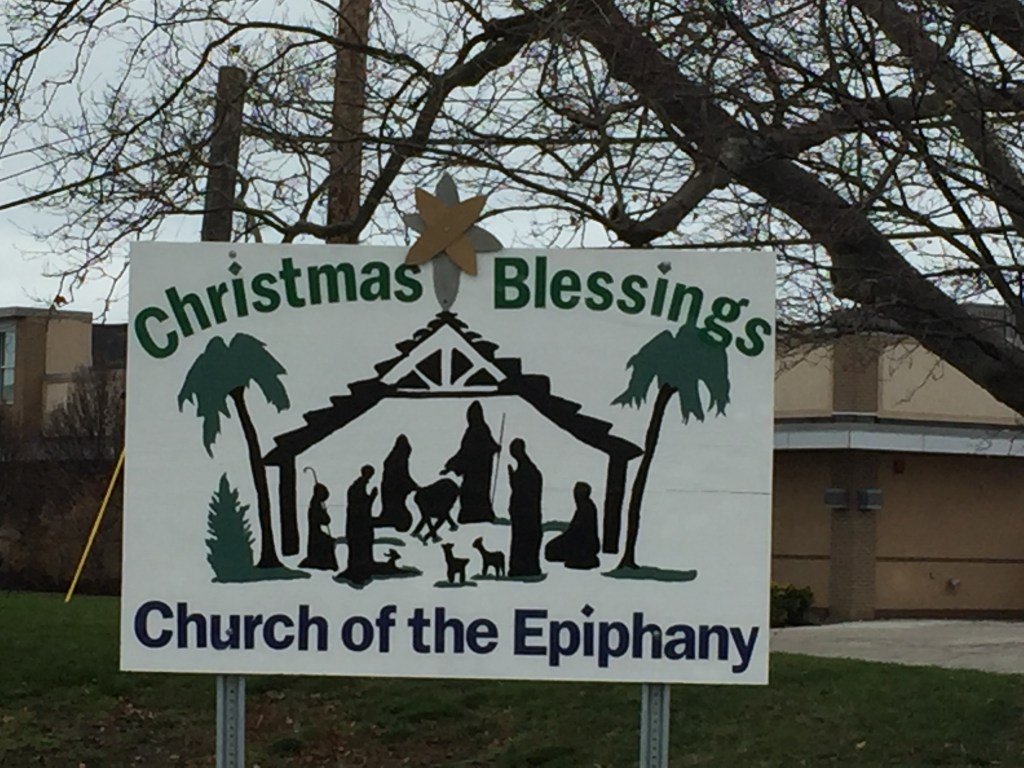
A sermon for the Church of the Epiphany’s service of Morning Prayer online on October 11, 2020. The Gospel reading is Matthew’s parable of the wedding feast. <hr>

What if this wedding were not about the king and his slaves, the guests and their clothing, the invited and the uninvited and the smited?

What if this parable were about the bridegroom and his beloved?

I am not saying that this is the meaning of the parable – I don’t know that it is possible to pin down that too exactly, and the brilliance of Jesus, the Word of God, as storyteller means that his creations can evolve, and translated by the Holy Spirit speak to us in different languages and tongues, as our language, our needs, and our sins have evolved in the centuries since this tale was first told.

But what if it were about the bridegroom? Jesus has elsewhere claimed that mantle and that title. He who, for all we know, was never married is not shy of evoking the feast, the celebration, the consummation that the role of bridegroom implies for his relationship with us, the church.

If this parable were about the bridegroom and his beloved, then the king and his worries about who will come and how they will dress and whether they will reflect well or poorly on his influence and standing are like Jesus’ words to Martha, “You are worried and distracted by many things; there is need of only one thing.” (Luke 10:41-42) Martha’s sister chose the better part, which was to attend to and to adore the bridegroom himself.

If the parable is about the bridegroom, then we are free, like Mary, to imagine ourselves in relationship with him. We are free to attend to him, to look upon him, to love him. We are free to imagine ourselves beloved by him, bound to him by covenant.

What if the kingdom of God were less about who is in or out, less about status or occupation or appearance, and more about mutual, covenanted love: the kind of love Christ models as bridegroom to the church, who loves us tenderly as though we were his own body. (Ephesians 5:25-30)

What if our covenant with Christ calls us to reciprocate that kind of love? What if our duties and privilege as citizens of the kingdom of heaven call us to love with that kind of tenderness? To treat our neighbour’s health as though we were caring for our own body? To clothe the stranger with the same kind of care and attention as we tend to our own needs for comfort, for warmth, for dignity? What if we were called even to sacrifice for the sake of the beloved, to share our worldly possessions and to bear with those who bear the image of the bridegroom, the image of God in Christ, for better or for worse?

What if the parable were about that kind of marriage, that kind of covenant, that kind of love?

It wouldn’t mean of course that the rest doesn’t matter: the pride and jealousy, the sneering and snarling, the slavery, the violence, the spite that echoes through the rest of the parable. They are still problems. They are still problems.

But it would give us a different starting point to look for their solutions. Instead of coercion, love. Instead of bullying, love. Instead of pride, love. Instead of judgement, love. Instead of rage, love.

I heard the news this weekend of the sudden deaths of two men whom I have known to love Christ deeply, and to serve Christ’s people out of that immeasurable well of love. I am shocked and saddened at the news of Fr Paul and of Br Andrew; yet I know that each of them has found his vows fulfilled, and that each has come into the embrace of his bridegroom.

In the midst of grief, there is love.

Amidst the flailing and failing and wailing and gnashing of teeth of this parable, there in the inner sanctum, at the centre of the feast, awaiting our attention, the bridegroom is patient, and faithful, and true, and beloved, let us not be distracted from him.

Posted in lectionary reflection, sermon | Tagged , , , , , , | 1 Comment

Currents

Looking to a goose feather floating on the surface
for a landmark is rank foolishness;

yet its inconstancy may be no greater than
the line of seagulls ranged along the rocks
nor the white-capped waves,
the deck-chaired people on the sand,

even the lake bed, gouged out by glaciers,
given time

Posted in poetry | Tagged , | Leave a comment

Good tenants

A sermon for October 4, 2020. The congregation is celebrating its second monthly pandemic-era Communion service outdoors on a cool October morning. The President of the United States is in hospital with COVID-19. The Gospel tells the parable of the wicked tenants, echoing the opening of Isaiah 5, which was the first lesson.

Image via publicdomainpictures.net


God expected justice, but saw bloodshed instead; looked for righteousness, but heard the cry of the oppressed.

This parable did not come out of nowhere. It follows directly from last week’s story of the sons who said one thing and did another. It is part of Jesus’ answer to those who find him to be too much. Too dangerous.

Jesus takes up the parable of the prophet and applies it directly to those accusing him of exceeding his authority, in demanding justice; of riling up the rabble, by preaching repentance, and righteousness, and the blessed mercy of God.

The tenants who break their contract with God, the owner, the planter, the tender of the vineyard; the tenants break their contract with God out of greed, out of pride, out of self-importance and because they believe that if they throw their weight around enough, they will get away with it.

But there is no bluster that can deceive God. There is no violence that can bend God’s will away from the justice, the tender mercy, the harvest of righteousness that God has planted. This disruption, this violence, this evil will not be allowed to stand.

And what will the landowner do? Note that it is not Jesus who predicts his participation in the cycle of violence. No, that word came from the others, the ones he was addressing. They still do not understand the complete revolution of righteousness that rejects bloodshed, that calls forth songs of praise, not cries of pain.

Jesus is unequivocal in calling out the oppression, the deception, the greed, the manifest evil that sin has sown in the vineyard. He does not employ the methods of revenge, of escalation, of dominance to right the wrong. But he is confident that justice will serve, and that righteousness will be returned; that those who would turn a blind eye to the kingdom of God will stub their toes on it.

He is so confident in the justice and mercy of God that he is prepared to go to the Cross for it.

In the book of the prophet, the curse upon the vineyard does not endure forever: “Let it cling to me for protection,” says the Lord; “let it make peace with me, let it make peace with me.” (Isaiah 27:5)

In the book of Jesus’ life, the Cross is not undone. The scars remain; the pain of life and death is not denied, but the Resurrection continues the promise that come what may, no deception, no violence of greed or oppression, no deadly evil, nothing can finally prevent the life of God becoming manifest in the world.

We come together today around the fruit of the vine and the wheat of the earth. We feast on the promises of God made flesh in Christ Jesus. May we be worthy tenants of the vineyard. May we return to God what we owe: our life, our breath, our all.

Amen.

Posted in current events, lectionary reflection, sermon | Tagged | Leave a comment

Standing up to Stand Your Ground: an open letter

An open letter to Governor of Ohio, Mike DeWine, participating in the #StandWithOhio day of action to stand against the introduction of Stand Your Ground to our state.

___________________________________________________________________

Dear Governor DeWine,

We are not at war with one another. We are not at war with our fellow citizens or other Ohio residents. We do not need a law that assumes an attitude of antagonism between neighbors.

So-called “Stand Your Ground” laws are dangerous.[1] They promote the proliferation of deadly weaponry over disarmament. They choose the escalation of violence over peace.

Stand Your Ground laws are racist.[2] They increase the deadliness of suspicion and bias, and insulate prejudice against accountability. Such laws are inherently unjust.

When, in the Garden of Gethsemane, Jesus told his followers that those who live by the sword will die by the sword, it was not a commandment but a caution.[3]

Stand Your Ground is dangerous law, and it should not be enacted in Ohio.

Sincerely,

Rosalind C Hughes

___________________________________________________________________

[1] “Conclusions: The enactment of Florida’s stand your ground law in 2005 has been associated with abrupt and sustained increases in homicide and homicide by firearm in the state.” From, “Evaluating the Impact of Florida’s “Stand Your Ground” Self-defense Law on Homicide and Suicide by Firearm: An Interrupted Time Series Study”, by David K. Humphreys, PhD; Antonio Gasparrini, PhD; Douglas J. Wiebe, PhD, in JAMA Internal Medicine, 2017; https://jamanetwork.com/journals/jamainternalmedicine/fullarticle/2582988

[2] “A paper in this issue analyzing the impact of Stand-Your-Ground
laws revealed a disturbing pattern of racial bias. Individuals (i.e.,
defendants) in Florida were more likely to avoid charges if the
victim was Black or Latino but not if the victim was white. Indeed,
individuals are nearly two times more likely to be convicted in a case
that involves White victims compared to those involving Black and
Latino victims.” From, ” Stand-Your-Ground is losing ground for racial minorities’ health,” by Valerie Purdie-Vaughns and David R. Williams, in Social Science and Medicine, Vol. 147, 2015; https://scholar.harvard.edu/files/davidrwilliams/files/stand_your_ground.pdf

[3] Matthew 26:52

Posted in current events, gun violence | Tagged , , , | Leave a comment

Word, will, work

A sermon for September 27, 2020, at the Church of the Epiphany, Euclid, Ohio.

This week Supreme Court Justice Ruth Bader Ginsburg lay in state at the Capitol. The US passed a grim milestone with 200,000 deaths from COVID-19. One former Louisville police officer was indicted for wanton endangerment over stray bullets that pierced a neighbouring apartment during the hail of gunfire that killed Breonna Taylor as she was in her bed. No other indictments were issued.

In the Gospel for today, Jesus compares the words and actions of two brothers as he tells the chief priests and elders that the “tax collectors and prostitutes are going into the kingdom of God ahead of you.”


The word of God and the will of God are the same. When God said, “Let there be light,” there was light. When Jesus, the Word of God made flesh, entered into our history, when he lived and died and lived again for us and for our salvation, he saved us. When he preached repentance, saying the kingdom of God is at hand, he meant it.

As sayings of Jesus go, today’s story is pretty straightforward. Faced with the animosity of the elders, Jesus accuses and admonishes them. Throughout his teaching and the preaching of John before him, the charge of hypocrisy has been high on the list of crimes and misdemeanours carried out by the elite of the people of God. “You pay lip service, claiming to follow the will of God, but you shirk the work that goes with the inheritance of the kingdom of God: to do justice, love mercy, walk humbly with your God. You hypocrites! The tax collectors and the prostitutes know the way better than do you.”

The tax collectors and the prostitutes; they heard the word of God, the Word of God and they knew it for joy and for freedom. They were not threatened by the idea of repentance and refreshment. They were not afraid for their own status. They knew that the world could be better. They went to John by the truckload and were baptized. They embraced Jesus, the Messiah, shouting Hosanna.

The leaders of the people, meanwhile, stood on the banks and deplored the whole spectacle. They stood by the banks that held their money and prestige and worried about a breach. They stood by their titles and their trinkets of office and pretended that these were the keys to the kingdom.

Their king, Herod, had John beheaded. Their police and the soldiers grabbed Jesus from the Garden of Gethsemane where he was at prayer, and handed him over to be crucified.

Meanwhile the crowd, the people, raised on the prophets, knew a prophet when they saw one. They recognized John and they rallied around Jesus. They knew that only the court prophets, the ones who bore false witness whispered “Peace, peace,” where there is no peace. A true prophet is a sign of God’s revolution. There is no need for a prophet where there is no need for change, for the revelation of something necessary to the realization of the kingdom of God.

Look, the prophet might say, you have people who call themselves leaders, of the people and in the churches. You have preachers who know that “Jesus himself did not regard equality with God as something to be exploited, but emptied himself … humbled himself,” for the sake of God’s children; you have preachers who refuse to humble themselves even enough to wear a mask to protect those with whom they speak. You have leaders who are so afraid of losing face that they flout the science and the basic kindness and community spirit that would save lives. And 200,000 people have died in this country alone of COVID-19. We have one-twentieth, 5% of the world’s population, but one-fifth, 20% of the world’s deaths by COVID-19. Where is the repentance? Where is the kingdom of God?

Which of these, asks Jesus, is doing God’s will?

This is not a hoax. One of our cousin churches in this community, a similar size to ours, has lost five lives so far to this disease alone. They haven’t even gathered for Sunday services yet; how can they, when they know what is at stake? Five lives from a single, small congregation like ours.

Which of these is doing the will of the Father?

In the meantime, the prophet might say, you have people who call for law and order, who balk at blaming, at holding quite accountable, those who shoot blindly into the dark, and a woman is dead, killed in her bed, and those who are angry and aggrieved are the ones who are called criminals. Violence will not heal the wounds that violence has inflicted; but neither will treating those wounds lightly, saying “Peace, peace,” where there is no peace, denying the justice of God’s love for Breonna Taylor, for every hair on her head, and the grief that flows from the throne of God when a sparrow is shot out of the sky.

Where is the repentance? Where is the kingdom of God? Who among us is doing the will of God?

There should be a third child in the parable. The second spins a good line but fails to follow through. The first is surly but sees what needs to be done and in the end is good for it. But where is the charmed third child who speaks the truth and acts on it, whose words and deeds are a match for the will of the Beloved?

John the Baptist came preaching repentance of sin to prepare the way for the coming Lamb of God. Jesus came preaching repentance for the kingdom of God could be, is, at hand. Neither prophet nor Messiah came to tell us that all is well in the world, nor that the status quo is the best that we can do, nor that their kings nor their chief priests and emperors were all that, nor to preach “Peace, peace,” where there is no peace, nor that lip service is enough to do the will of God, which is the humble and sometimes hard, just and ever merciful work of love.

Jesus has shown us the way of love. If we say that we will follow, will we indeed follow through? Or who will we usher ahead of us, saying with false humility and fear, “You first”?

The kingdom of God is at hand, Jesus told us. It is a revelation, and a revolution, and all it requires of us is our heart, body, soul, and strength.

The Word and the will of God are the same. They will save us. “Turn then, and live.” “Work out your own salvation with fear and trembling; for it is God who is at work in you, enabling you both to will and to work for his good pleasure.”


Illustration: Christ in the synagogue, by Gustav Dore

Posted in current events, lectionary reflection, sermon | Tagged , , , , , , , , , | Leave a comment

God gets maternal anxiety

Image: cover art from Embodied, by Lee Ann M. Pomrenke


I knew that I wanted to become a mother from an early age. It was probably not long before I discerned that I might also be called to become a priest. I had never seen a woman serve the Eucharist, and yet it made such sense, for a mother or a godmother to preside over the feast, and to help her Maker make sure that the children were fed.

One vocation was fulfilled long before the other. When I finally applied for the ordination process in the Episcopal Church, a friend who has known me longer than most others was surprised. “I just don’t see you as a priest,” she told me. She grew up in the Vicarage as the child of a parish priest – “My dad was always distracted. I can’t imagine you not being present for your children.” Well, neither could I.

A mentor told me, as we discussed the part-time, peripatetic approach I would take to seminary, that I would have to resign myself to failure: that I would not measure up as a parent, as a student, nor as a potential priest, as hard as I tried. He was speaking, he implied, from experience.

My friend and my mentor each touched upon that near-fatal intersection of parenting and perfectionism that will plague me with anxiety until the kingdom come.

Does God, that perfect Parent, suffer anxiety?

To an entire school of theology of course the question is nonsense. That moment of separation on the Cross, My God, my God, exists in some minds entirely to reassure us that no, God does not suffer, because to do so implies alterations, currents, moods in the heart of changelessness.

My experience of love is that it does not live without that tension between adaptation and constancy. “Love is not love / which alters when it alteration finds,” Shakespeare wrote (Sonnet 116), but love does not restrain itself from the changes and chances of celebration, grief, and bewildered groping that accompany the lover through life.

My greatest fear in life is letting down my children, failing them; and the second is like it: failing to live into the call that I have claimed, to be a priest in Christ’s church. On the first morning that I left before dawn to drive to the seminary, I looked up and saw our youngest child, her face pressed against her bedroom window, crying as I reversed away from her.

Does God ever worry whether every child knows well enough how much She loves us?

I know that I am projecting my maternal anxiety onto God, but our God, after all, in one moment is a mother hen, gathering her chicks beneath her wings; in another, a mother bear, fearful to her enemies and warm but stern with her cubs. Our God is a jealous God, who appoints and anoints, repents and relents.

God knows I have carved imperfect slices out of my life to deliver to the grandparents and godparents of the church and my own, now grown, offspring, dropping crumbs like chocolate cake and making a mess. God knows.


This post is part of the book launch blog tour for Embodied: Clergy Women and the Solidarity of a Mothering God, by Lee Ann M. Pomrenke. Embodied includes reflection questions at the end of each chapter, to instigate conversations that lead to support and new perspectives. The book is available this September from Bookshop.orgAmazon, or Cokesbury.  

Posted in meditation, other words, spiritual autobiography | Tagged , , , , | 3 Comments

Undertow

Ripping tides,

throwing horses,

hurling seabirds to the sky,

thrashing rock into sand, wrecking

the abandoned homes of limpets and clams,

reducing it all to grit and foam,

beaching itself in exhaustion,

receding;

the sand dries,

the rock stands

and starfish wait like wishes

for the next rising tide: such is my prayer;

beware of the undertow.

It has a warrant of its own.

Posted in poetry, prayer | Leave a comment

Absolute mercy

A sermon for Morning Prayer online from the Church of the Epiphany, Euclid, Ohio


You have heard it said that power corrupts, and absolute power corrupts absolutely. But I say to you that grace redeems, and absolute grace redeems absolutely.

I wonder of whom Peter was thinking when he asked his strangely specific question about forgiveness. Was he thinking of his own brother and fellow apostle, Andrew? Or did they have another sibling left at home? Perhaps he meant Judas, his fellow disciples; maybe he had some premonition of an almost unforgiveable betrayal.

Joseph’s brothers, likewise, are afraid that there is a limit to Joseph’s magnanimity. They are keeping score: how many bags of grain has Joseph added to their debt of guilt for throwing him in the pit and selling him to strangers? How could they ever pay off the burden of his forgiveness?

Joseph was a prophet. He knew how to interpret dreams and messages from the heart of God. He had glimpsed the purposes of the Divine. He was overcome by God’s Spirit of mercy and grace. How else could he forgive all that his brothers had done to him, and all that they owed to him? Only by operating in a different economy than seven times seven, than the one that keeps score.

For mortals, as Jesus says elsewhere, it is impossible; but for God all things are possible.

Peter’s question to Jesus was personal, but Jesus’ answer was a parable. It’s a parable, a parody of what happens when we forget to factor grace into our everyday calculations, when we fail to forgive.

Torturing the deplorable debtor is not going to get any payback out of him. It doesn’t make anyone’s situation better. And that’s the point: this is the trap we fall into when grace is answered with accountancy, and forgiveness with comeuppance.

We still have, by the way, debtors’ prisons, where people remain incarcerated because they cannot afford the price of their freedom. They are still unjust, and still unhelpful. Many of those freedom funds that some of us contributed to during the protests earlier this summer following the killing of George Floyd were already set up and ready to assist those taken off the streets because of the pre-existing conditions that lead to people being imprisoned punitively for being unable to pay their way out of jail. There are still people waiting for the good news of the kingdom, and the release of the captives that Jesus and the prophets promised.

But back to the story. The threat that hangs over and hangs from this parable is not that God will send us to hell until we pay what we owe – where is the sense in that? How would that even work? Where is the God of mercy and steadfast faithfulness in that story, slow to anger and of great kindness? Where is the God who so loved the world?

No, the threat, the risk of the parable is that we, like the servant, who have known grace, like the servant, forget to live like it. That our sense of justice, like his, is based on fear; on no one being any more free, or any more forgiven, any more loved than we are.

Josephs’ brothers were afraid that his mercy was not real, because they could not imagine being that merciful themselves. The servant was afraid that his king would change his mind and call in his debt after all, and his mistrust of mercy, and his failure to multiply it, made him do terrible things, and led to his own downfall, and perpetuated the systems of injustice that surrounded him. He put his fellow slave in prison and he pulled his king back from the brink of forgiveness and a real awakening of compassionate justice.

Peter asked Jesus just how many times he must forgive his brother, and Jesus told him that instead of counting out grace like small change, he should, we should, remember the mercy we have experienced before the throne of God, and count our blessings. Because while our hearts are busy doing that, and running out of hands and fingers to count on, it is so much harder to hold a grudge.

But the biggest shift is in trusting that mercy itself is real; that even if we fail at it seven times seventy times, God’s capacity for forgiveness is immense.

Isn’t that what Jesus came to show us, in life, in death, in resurrection, and in parables? That God loves you, more even than you love yourself?

Absolute power. Absolute grace. Absolute mercy. Imagine what absolute love can do.

Posted in lectionary reflection, sermon | Tagged , , , , , , | Leave a comment