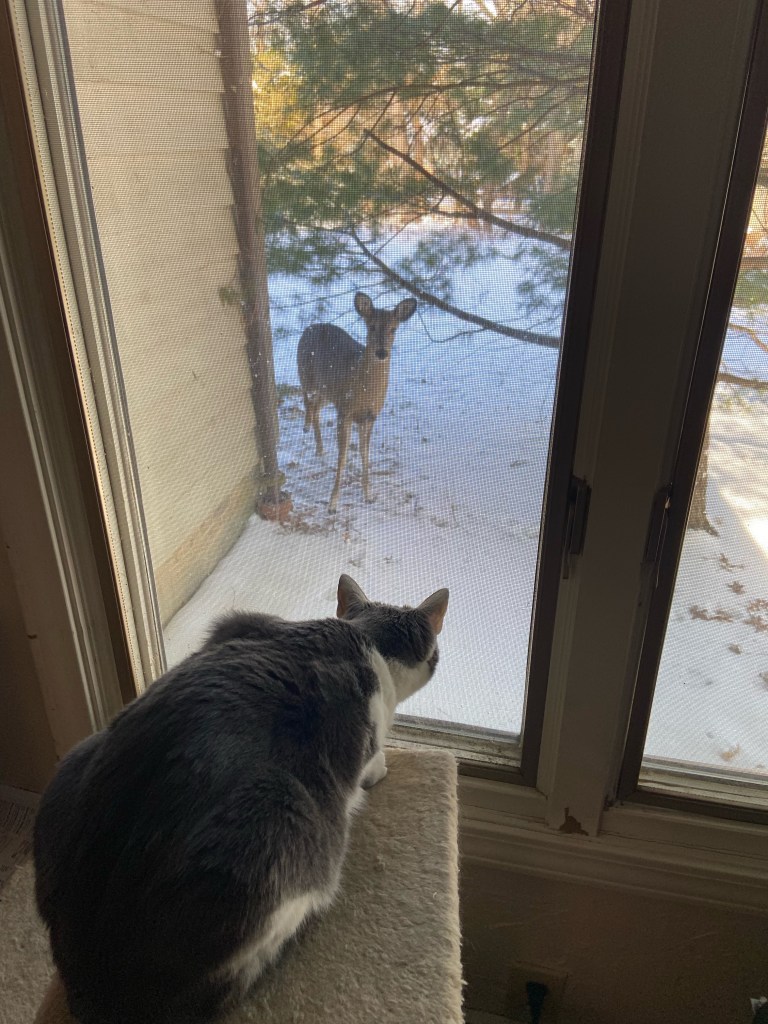
It was the sea


It was the sea,
salt and water,
the press of the tide
and the undertow;
the frightening mystery
of jellyfish; the shells,
whitewashed tombs
yet evidence of enduring
beauty

I remember once
we went out
in a rubber dinghy,
daring the waves to drown us,
and they did.
Beneath the boat,
I held my breath,
let the currents
fight one another
for me.

The church looked like
an upturned boat;
I could count the rowers’
benches stretching
toward the Host upheld
just out of reach

When the tide went out,
mudflats emerged,
full of seagulls,
silt sucking at ankles and thighs;
as often as I entered the ocean
to wash my feet
I found myself once again
stuck in the mud.

If I could have stayed
with the sea, salt
drying on my hair …

I am participating in a 20-day Evangelism Challenge designed by the Revd Dr Patricia Lyons for and with the Diocese of Ohio (although I don’t promise to post every day!). Today’s prompt for drawing closer to God: Who introduced you to (a relationship) with the person of Jesus Christ, and how? 
Sign up for more prompts at https://www.dohio.org/offices/congregations-christian-formation/2022-winter-convocation

Posted in poetry, prayer, story | Tagged | Leave a comment

Is it joy?

Is it joy
or curiosity that binds them;
astonishment in discovering
that God
has made another, unalike,
incomprehensible if somewhat
familiar?

Is it joy,
the flick of the ear,
the tic of the tail,
a frisson of fur filled
with static
electricity,
the stuff of life?

Who would not enjoy
the vast and tiny details
of God’s imagination;
the curious creations
of Love?

Photo credit: Gareth Hughes

I am participating in a 20-day Evangelism Challenge designed by the Revd Dr Patricia Lyons for and with the Diocese of Ohio (although I don’t promise to post every day!). Today’s prompt for drawing closer to God: What in the past 24 hours has given you joy?
Sign up for more prompts at https://www.dohio.org/offices/congregations-christian-formation/2022-winter-convocation

Posted in poetry, prayer | Tagged , , | Leave a comment

A Song of Anna

Not fruit of my womb,
but fruit of the Tree
of Life, this one
who will give his flesh
for the world, and I,
who have fasted so long,
now feast my eyes,
my heart, my soul,
upon the child of God,
the promise of Israel;
Not fruit of my womb,
yet I give thanks
that I may bear this
(complicated) joy

into the world.


A version of this Song appears, with commentary, at the Episcopal Cafe.

Or, try singing this version to “O Jesulein süß”:

Featured image: Presentation of Christ in the Temple, from the Melisende Psalter, C12th British Library, CC0, via Wikimedia Commons (detail)

Posted in holy days, poetry, prayer | Tagged , , , | Leave a comment

God has warm legs?

A homily for the Fourth Sunday after the Epiphany, which was our Annual Meeting at the Church of the Epiphany, Euclid


The other morning I happened to pick up my phone before I got out of bed. This is very unusual; I try to follow the advice of the professionals and leave my phone behind when I am trying to sleep. But no matter; the phone was there, I picked it up, and it caught a ray of sunlight coming through the blinds and flashed it across the far corner of the room.

The cats love random flashes of light. They sit and jabber at them when they land on the ceiling, and chase them around the room like laser pointers. Now, every morning since the phone incident, the gray cat has woken me by poking around in the corner, calling softly for the flash of light she once saw there. She doesn’t understand that the conditions that produced the effect were a one-off combination that I might not be able to reproduce even if I tried: the exact angle and brightness of the sun, the exact angle at which I held my phone, the circumstances that had led me to have it in my hand in the first place.

Eventually she gives up and comes to lean against my legs until I have to leave the warmth of our little nest.

Watching her yesterday morning, I thought of the ways in which we all look to recreate events and conditions from the past that might not be available or relevant or even desirable any more. When the magi left the manger, they returned home by another road, and had they decided to return to Bethlehem, to visit the child and his mother once more, or had they sent their friends to follow up, they would not have passed through Herod’s palace again, looking for directions. They would not have found the holy family in the same place, either; they had fled to Egypt. 

Even Jesus, returning to his familiar family synagogue at Nazareth discovered that it was not the same as when he was a child. He quoted proverbs to the people – not biblical proverbs, but adages and idioms they had once taught him: Physician, heal thyself; and the one we all know, hanging in the background, cross-stitched into the air: You can’t go home again.

Conditions change, the world turns, people grow, some get sick, some get better, some flee to Egypt, some return. We cannot expect, nor should we try, to recreate the past; but there is sunlight in the future, too, and flashes of inspiration. And there is warmth still in the relationships that endure. The cat, when she has given up on the flash of light, curls up in the patient knowledge that sooner or later, someone with warm legs will feed her; that she is beloved.

Jesus went to the synagogue on the sabbath day, as was his custom; and he continued to do so throughout his ministry. His relationship with God, with the prayers of his people, with the scriptures and their shared meaning for the gathered people: these were the warm places that he returned to again and again, knowing that they would feed him even as he paid out healing and hope wherever he went.

It is love that holds us together, after all: the love of God that reassures us that we will be fed, forgiven; the love that we have for one another, that has its moments of regret when we see whom we are missing; the love that Jesus has planted in our hearts, Christ’s love for the world, his longing to set it free.

Some things are constant; others are ephemeral, tricks of light in a mirror. We put our faith, if we are wise, in that which will endure. I am not saying that nothing will ever be the same again, although it’s true that we cannot visit the same moment twice. But we are not dependent upon flashes of light appearing in the same place twice for our faith, our hope, nor our love. We know the warmth of God’s love that sustains us, the warmth of the love of this community that surrounds us. However the conditions change and shift and wherever the light comes from this year, God has proven God’s constancy toward us. The Word of the Lord is with us, for us to plant and to build us up, our warm refuge, and our strength.

Amen.

Posted in homily, lectionary reflection, sermon | Leave a comment

Decade

Ten years a priest.
I should have something to say,
but I have let words trickle away, 
at funerals or weddings,
during mundane Monday 
phone calls, meetings;

I notice the peripheral
things, such as my hair,
cut off after my husband’s cancer,
when I couldn’t handle
one more thing,
which grew back 
in pandemic’s early days
when I couldn’t be near
one more person,

Is now the same length 
again as it was ten years
ago, although
each strand that hangs
in the photos between 
my face and my family 
has fallen away, 
like words that fell
from my lips 
or silently decayed.

They have been replaced,
with new growth – a miracle,
as are words of grief,
blessing, prayer that continue
to babble, to bubble up,
to sink into the silt,
to water my eyes;

as is the Word that continues
to wrap my heart with stubborn moss.

Posted in poetry, prayer | Tagged | 1 Comment

On the sabbath, he went to the synagogue

A sermon on the third Sunday after the Epiphany, January 23 2022. The gospel reading includes Jesus’ teaching in his childhood synagogue in Nazareth.

On the sabbath, Jesus went to the synagogue, as was his custom.

It is a comforting picture: Jesus, who had grown up in Nazareth, attending the synagogue week by week. It would be full of familiar details, familiar faces. The scroll which they handed to him – he had watched his mentors, perhaps his own father, read it as a child. Now, it was his turn to proclaim the prophet’s message of hope and of justice, healing and the knowledge of God’s love, God’s favour.

It was the sabbath, so she went to the synagogue. I wonder how many people’s stories began that way last weekend, before the worship of the Jewish people was interrupted yet again by violence. It should be as safe as we feel coming to church. It should be as easy and as natural as the scripture makes it sound: it was Saturday, so he went to synagogue.

If the description of Jesus going home to his childhood congregation makes you nostalgic for gathering in our sanctuary, that is valid. We will be back together soon enough, though, and throughout this pandemic period, while it has been challenging, we have not faced any threat that is not common to the entire global population.

Unfortunately, for our cousins and siblings going to synagogue, there are other considerations. It is a sad fact that antisemitism continues to infect the public imagination. It was no accident that last week’s hostage-taker chose a synagogue to stage his act of attempted terrorism. He, who grew up two hundred miles and not ten years away from me, had absorbed messages about Jews that coloured his choice.

Yair Rosenberg, writing for the Atlantic, calls antisemitism, “a conspiracy theory about how the world operates.” It is dangerous to everyone, to all of us, he argues, because the nature of conspiracy theories is to distort our view of reality, of how the world really works, in favour of “fevered fantasies.”

We have seen how dangerous conspiracy theories can be over the past two years when celebrities and authorities and people’s uncles have touted miracle cures for Covid over proven medicine, and eschewed public health practices in favour of magical thinking, or misplaced individualism. We have seen how dangerous conspiracy theories can be to our democracy.

Conspiracy theories affect us all; but the enduring nature of antisemitism is particularly dangerous to our Jewish neighbours. It is simply not right that anyone should have to think twice about going to synagogue on the sabbath, as was Jesus’ custom.

We have a particular responsibility to counter antisemitism wherever we encounter it, not only because of Jesus’ heritage, and not only even because the Christian churches have a long and sorry history of theological and practical antisemitism for which to atone. We, who follow the Way, the Truth, the Life, have a responsibility to speak up for that truth, to counter the lies that bind our cousins to the risk of violence: to counter antisemitism and it vile conspiracies in our communities, and even in our own reading of scripture.

When Jesus stood up to read from the scroll of Isaiah in the synagogue, and when he boldly claimed the Spirit of God for himself, and declared that the scriptures had been fulfilled, that the year of the Lord’s favour was, like the kingdom of God, at hand – this was not a claim without risk.

The Roman empire had claimed kingship for itself, and installed its Caesars as its gods. They knew, the Romans, that the Jews were faithful only to the Almighty; that they would not worship idols of metal, stone, nor even of flesh. Within a generation of Jesus’ death and resurrection, the Romans would raze the Temple and devastate the priests and the people. Yet here was Jesus, claiming that the kingdom of God, the year of the Lord’s favour, was at hand.

In retrospect, we, as Christians, understand that he meant that he was God’s favour, God’s love born among us; that he had come to heal the sick, bind up the broken-hearted, release the captives from their misery, even as God had always been faithful to God’s people, leading them out of bondage in Egypt, restoring them from their exile, binding up their broken hearts again and again.

Perhaps it was because of the breadth and length and power of the Roman empire that God chose this moment to reveal the plan for salvation to the rest of the nations: because in this moment all the nations needed it; because in this moment all were crying out for something real, something true, instead of the false gods of the Caesars. It was also a prime moment for the word to take flesh and to be carried far and wide, across trade routes and along roads made straight, ironically enough, by their Roman builders.

Perhaps it was because it was in this moment that the nations needed to hear of something greater than the might of armies, stronger than the grip of emperors, a deeper peace than the uneasy truce of a people kept under control by threats and promises.

That word that was needed, that Word that was spoken, came from a young man from Nazareth, who had gone to synagogue on the sabbath day, as was his custom, and told his people, his family, his community of faith, his beloved ones, “Today, this scripture has been fulfilled in your hearing.”

It has been the promise all along, and God has always fulfilled God’s promises. For our part, we understand that Jesus is the pinnacle of the promise, the evidence of Emmanuel, God with us; the atoning sacrifice and the light to the nations, to bring them, to bring us into the covenant that God had long established with God’s people.

And Jesus, this Jesus, our Jesus, was a Jew, going to synagogue on the sabbath, as was his custom.

We are reasonably confident that next Sunday, we will come back together in the sanctuary for our Eucharist and our Annual Meeting. For those who need to stay home to stay safe and healthy, we will continue to livestream and open the Zoom room. No one should feel obliged to risk their health or the health of others to be here. But those risks are not ones that we alone face.

As we prepare to come together on Sunday, as is our custom, let us pray for our siblings and cousins whose sabbath is complicated by antisemitism, and let us decide that, as far as it depends upon us, this will be the day, the year, when the scripture is fulfilled: good news and healing, release from all oppression, the knowledge of the Lord’s favour.

Image: (Part of) The Great Isaiah Scroll MS A (1QIsa, the Dead Sea scrolls), via wikimediacommons (public domain)
Posted in current events, lectionary reflection, sermon | Tagged , , , , | Leave a comment

Working on a miracle

A sermon for the second Sunday after the Epiphany in 2022. The Gospel reading is the story of the wedding at Cana, at which Jesus turned water into wine. Other texts referenced include the Psalm for the day, Psalm 36.


How priceless is your love, O God! Your people take refuge under the shadow of your wings.
They feast upon the abundance of your house; you give them drink from the river of your delights. (Psalm 36:7-8)

And who will draw the water? And who will taste it, to find that it has been transformed, by the grace of God, by the presence of Christ, into something new, and unexpected, and long-awaited?

When I was a child in the 1970s, there was a drought – I remember the year I learned the word and its meaning – which resulted in planned water shut-offs three or four times a week. I remember filling the bath in the morning with a few inches of water to throw down the toilet or to wash hands; my mother filling the kettle so that there would be water for tea after work; pans of water sitting idle on the stove, ready to be pressed into service. I have to wonder, now, whether we really saved any water that way.

But either way, it meant that when a man came to my front door Thursday and said that they were about to shut off our water for the remainder of the day, I was ready, and I remembered. I remembered my mother, and as I – not too reluctantly – put off washing the kitchen floor till later, I remembered her mother, my grandmother, who once worked as a domestic servant. And as I pulled together the wherewithal to get our household hygienically and well-hydrated through a single afternoon, I thought about the servants in the story of the wedding, the ones sent to haul the water to make the miracle happen.

There are only a couple of stories in the gospel in which Jesus is said to have changed his mind about what he would or would not do. This is the one of them.

At first, when his mother came to him to report the lack of wine, Jesus responded … wearily? Why do I have to do everything? What has this to do with me anyway? How is it my problem? And don’t I get even an hour off to enjoy the wedding? (I’m paraphrasing.)

But Mary, his mother, in a way that only she could, read the man and ignored his words. She did not argue with him, merely turned to the servants and said, “Do as he tells you.” She put him in his place – amongst the servers. Was it from this incident that he derived his famous aphorism, “For the Son of Man came not to be served, but to serve”?

“Now standing there were six stone water jars, …. each holding twenty or thirty gallons.”

Some say that the next wars will be fought not over oil but over water; but it doesn’t have to be that way. When one runs short, it is all of our business. There is no, “What is that to me?” There is, for instance, no distance between Flint, Michigan and here, no difference between its children and the children of any city cornered into substandard housing and fed lead instead of water. 

You all know that the work is not done. Jesus, for the rest of his ministry, preached repeatedly parables about fair labour, a living wage, the value and dignity of each person and an end to their exploitation. The work is not yet done. There is time yet for us to participate in the miracle, to “let justice roll down like waters, and righteousness like an ever-flowing stream.” (Amos 5:24)

The shortages that we encounter tend to be those that we have created, through overuse, exploitation, gluttony. Where we have hoarded access to clean water, creative medicines, even access to the vote; where we have created shortages, it is not for us to say, “What is that to me?”

The work is not yet done, and those who will not see, who turn a blind eye to the continuing  and corrupting effects of greed, of privilege, of racism, and antisemitism; who complain about running out of wine while others are still hauling water; we don’t even know what it is that we are missing.

I can only imagine my grandmother’s face if she were serving at a wedding, tending to all sorts of details and dust-ups and delicacies so that the guests never even knew how much work it took, and someone told her, “Stop what you are doing and go fetch – I don’t know – like 150ish gallons of water for me, would you?”

This was not a small ask. But then, when the water was drawn and poured and her face was sweating into it, he told her with a twinkle, “Now draw out a measure and take it to your leader.” Now, having let her in on the work, he was letting her in on the joke, on the cosmic laughter that was his wedding gift not only to the couple but to all who were in on the secret, the servants and the servers, and his mother.

When Jesus first demurred, it was his mother, knowing that he would not resist, could not resist protecting the joy and the celebration of the loving couple; it was his mother who recruited him helpers, and reminded him that he did not have to perform the miracle alone. When he recognized that he was not alone in the work, he was also ready to share the joyful revelation of the result, the surprise on the chief steward’s face, with his new friends.

It is such a gift that Christ has shared with us, to share not only in the labour of love but also in its sweet rewards: the waters of purification turned into wine as repentance is turned into new life, which is resurrection; contrition into a celebration of the mercy of God, which is justice.

The work is not yet done. God knows, the work is not yet done. Which also means that there is time yet for us to participate in the miracle, if we are willing.

“How priceless is your love, O God! Your people take refuge under the shadow of your wings.
They feast upon the abundance of your house; you give them drink from the river of your delights.” (Psalm 36:7-8)

Posted in lectionary reflection, sermon | Tagged , , , , | Leave a comment

The gifts of the wise ones

A sermon for the Sunday after the Epiphany, 2022


On the cusp of the year, late in the afternoon of New Year’s Eve, I composed an email withdrawing from a retreat that had been postponed from Easter 2020 to Easter 2022. The travel seemed too uncertain for me to have any confidence in booking it, and had I got there, the landscape of the week looked so different from what I had expected when I first paid my deposit in 2019 that I no longer recognized it.

As I posted somewhat wryly on Twitter that evening that it seemed the perfect way to round out 2021, and a friend commiserated, I found myself telling her, truthfully and to my own surprise, that it was all good; that letting go of those plans allowed me to enter this year open to whatever shape it takes, rather than needing to bend and bind it to my own will.

I have been learning from the wise ones who visited Jesus in his infancy, who came from the east looking for the king whose star had risen to show them the way, who expected to find the glory and the mercy and the justice of God made manifest, and found these things in a child in the humble town of Bethlehem.

 Humility, flexibility, creativity, faith in the reach of God’s mercy: these are the gifts that the wise ones offered me on the cusp of the year.

Humility. These may not have been kings but they would at least most likely have been members of the courts of kings, revered and wealthy in their own right, enough to travel with treasure chests, enough to impose upon Herod in his palace, bringing and seeking news of a Messiah.

William Barclay, in his commentary on Matthew, writes that, “just about the time Jesus was born, there was in the world a strange feeling of expectation of the coming of a king. Even the Roman historians knew this.” They wrote of a “firm persuasion” that from Judea would arise a universal empire.[i] The magi were not deterred by the vassal state of Judea under Roman rule. They did not despise their former conquest, nor demand whether they could not have grown a new king at home instead. They had humility, not only to set out seeking this new king in a foreign land, but to petition Herod’s court for information, and when they found the child, not in Jerusalem but in the backwater of Bethlehem; not in a palace but who-knows-where; not wrapped in silk robes but in mean swaddling clothes, they had the humility to kneel before him anyway, sure that God knew what God was doing, and that from such small beginnings God could change the world.

Having the humility to recognize God in the person whom we least expect to reflect God’s image; to set aside our expectations and to look instead for God’s incarnation: that is one lesson from the wise ones.

Their flexibility and creativity in finding a new road home is also rooted in humility. Rich men are often used to getting their own way. These men were willing to try a new way. In order to protect the Christ-child and his family, they set aside their courtly privilege and took the side route, skirting Jerusalem and Herod’s dining table, eschewing the King’s Highway, following the peasant tracks through the countryside and camping out in unexpected places, new oases, on their way back out east.

They say that necessity is the mother of invention. Finding new ways to travel old paths, or finding new paths to old goals, or setting out for something entirely new and unenvisioned: these are not only the challenges of a church during a global pandemic, but they are the work of the inventors, the engineers, the artists.

On the Feast of the Epiphany my son was driving home to Georgia when he got caught up in the snowstorm around Lexington, KY (he kindly gave me permission to tell this story). At one point he was diverted off the highway and found himself on a side road made almost impassible by an immovable obstacle. Cars were trying to pass by on the verge, trying to keep moving to avoid getting snowed in all together. Motorists had to get out and help each other, pushing cars past the blockage to keep things moving while they waited their own turn to get by. Sometimes a diversion brings unexpected grace amongst its frustrations. Sometimes, some of us get to be the unexpected grace.

The hospitality of the desert is long-established. Only by the kindness of communities and of strangers and the sharing of the rare springs does one survive such a harsh environment. The wise ones must have met with such oases of grace on their unfamiliar road home. Perhaps they left some gifts themselves, gold to match the hot sand.

Making a way where none is visible is a specialty of our God, from the Red Sea to the wilderness, from the journey of the magi to the marches of freedom movements, from the flight to Egypt to the streets of Euclid.

The faith that the magi had – these pagans, these heathen astrologers – in the breadth and reach of the mercy of our God; they knew that they were not excluded from God’s justice, which is mercy. They knew that they were beloved. If not before, they knew it when they saw that Christ-child, and knelt before him, guided to his feet by a star as if by an angel of the Lord.

When they dreamt of God, they listened to their dreams. They knew that they were, as much as anyone, the objects of God’s loving care. They found a new way home.

The Feast of the Epiphany is a new year of sorts for us, the people of Epiphany. Who knows what this one will bring. But if we are able to keep our hearts and minds and expectations open; if we deploy the gifts of humility, creativity, faith that the magi, the wise ones have taught us, then we may find unexpected grace, unlooked-for epiphanies, the glory of God waiting for us to stumble upon it as the year takes shape, growing like a child, full of curiosity, wonder, and delight. 


[i] William Barclay, The New Daily Study Bible, Volume 1: The Gospel of Matthew (Westminster John Knox Press, 2001), 31

Image: Adoration of the Magi, Konrad Laib, early 1400s, photographed at the Cleveland Museum of Art (detail)

Posted in holy days, lectionary reflection, sermon | Tagged , , , , , , , | 1 Comment

When worlds collide

A brief word on the Feast of the Epiphany, January 6, 2022


The Feast of the Epiphany is one of the major festivals of the Christian calendar that always falls on the same date: January 6th in the west. That means that unlike Easter or Pentecost, for example, it will always be associated with other, less biblical, more current events that overtake the news on that day, such as the insurrection at the Capitol last year. 

Today, while our church celebrates and ruminates on the revelation of Christ to the nations – the arrival of the magi at the manger and their joyful homage to the child they recognized as the saviour of the world – the news cycle is full of analysis, unresolved shock, and grief over what happened and what so nearly happened to our nation a year ago today.

It’s the same strange juxtaposition, in a smaller and more focused form, as hits me every August, when the Feast of the Transfiguration, another epiphany of sorts, falls upon the anniversary of the American deployment of the first, devastating nuclear bomb at Hiroshima.

How do we reconcile the glory of Christ come into the world to save us from our sins, from ourselves, his healing mercies with our continuing and continual capacity to do harm to one another, as well as to our own souls and spirits?

And yet it is precisely that healing mercy, the revelation of the endurance and the depths that God’s love plumbs that allow us to lift our heads, to lift our feet, to lift our hearts and our hands, to continue to proclaim God’s goodness to the world and to live it out, with God’s help.

Yesterday would have been my mother’s 85th birthday, had she not died 16 years ago. She always loved that her birthday fell on Twelfth Night because, she said, it meant that all of the Christmas decorations came down just in time to accommodate her birthday cards. Epiphany has long been tinged with that memory for me.

Memories and anniversaries, events, demands, and distractions may conspire to trip us up on our way to the manger, threaten to cloud the star that leads the way. But the confluence of personal and public, sacred and secular calendars, the intersection of grief and hope are themselves redeemed by the reminder of new life, true light, the enduring mercies of God as revealed to us in the birth of Jesus Christ. 

He is our guiding star, our king. He is our hope and our healer; he our way, our truth, our life. Come, wise ones: let us adore him.

Amen.


Image: Book of Hours (Use of Rouen), c. 1470, Master of the Geneva Latini (active Rouen 1460-80), photographed at the Cleveland Museum of Art, January 2022

Posted in current events, holy days, homily | Tagged , , , , | Leave a comment

By another road

It was not the journey
a wise person would have planned
with toddlers in tow, wakened
by the stuttering motion of a car
stuck in traffic,
jammed in their seats while the world
hemmed us in behind and before,
each shining roof the baked tile
shell of a sprawling tortoise lumbering
slowly through the green grass of England.

Far from the silken trade routes
of the motorway, lacing our way through
chocolate-box villages, suddenly we saw,
standing as they had for how many thousand years?
– the weathered obelisks, quarried from Wales,
hauled across the heathen wilderness,
set in a circle to mystify, to mesmerize,
watching our puny progress
with stony amusement and
an almost prophetic stillness.


Image by Erwin Bosman, CC0 (Public Domain Dedication), via Wikimedia Commons

Posted in holy days, poetry | Tagged , , | Leave a comment