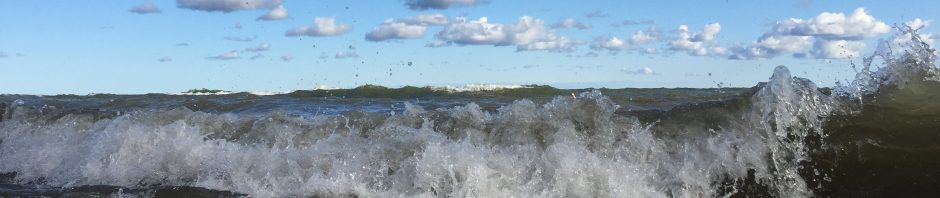
Solid ground

Constant God,

You are the one fixed point in a universe that never stops moving;

expanding, exploding, orbiting, spinning on its axis;

the very earth beneath our feet shifts and shrugs,

magma boils beneath the surface, fluid.

No wonder we find it difficult to keep our balance.

When we learned to dance, the teacher said

to pick a spot on which to fix our eyes,

and let our body spin around it,

our focus constant,

to guard against motion sickness, dizziness, the fall.

Constant God,

fix us on you so that in the rise and fall of

breath and death,

in the steady erosion of glacial grooves

and the rush of the flood, we are not overwhelmed,

nor frightened to fall against you.

Amen.

Posted in poetry, prayer | Tagged , , , , , | Leave a comment

Heart healthy

If I am working into the evening, I try to get out around four or five o’clock for a walk. It’s cheaper than caffeine, and it doesn’t keep me up all night.

So I found myself contemplating our contemplative prayer session to come tonight while walking an unfamiliar path. That was something of a miracle in itself: lately, I’ve been hard pressed to take a new breath, let alone a new path. When I was working the hospital chaplaincy, and I’d come home sad, my spouse would ask if it was the death that did it. No, I told him, death was one thing; life, in its infinite variety, that’s what would do you in.

Anyway so, on a new path, wondering if it would take me under the road with the water, into pastures new. Instead, at the break, it made a sharp turn to the vertical. Lacking the initiative to do otherwise, I followed it.

As I wandered along the top, I contemplated the fact that I had not seen any other trails up from the bottom, which meant none down. The head of the valley was far too far to reach in time for contemplative prayer, and for some reason, going back the way I had come was unthinkable, fearful.

As the road in the valley below kept pace, I meandered past spent fireworks and beer cans, plastic chairs cascading down the cliffside. I reviewed the fact that I was wearing a skirt and proper sandals for a light afternoon stroll, and that the proximity of the parish precluded hitching everything up over my shoulders and sliding down the hill.

I found an opening, and began gingerly, sideways, to inch my way from tree to tree – I think this is how we became tree-huggers – down the hill. I contemplated my imminent embarrassment. After about two-thirds of the descent, I took off my shoes, despite the earlier broken glass and large red spiders, feeling the need to grip the dirt with my toes.

As I reached the last line of trees, I saw across the divide another woman of a certain age, wearing a pretty blue dress and proper shoes, walking on the all-purpose tarmac trail, and I felt such kinship that I wanted to hug her and douse her with my elation, but it seemed unfair to frighten the poor thing.

Smiling foolishly, I made my way across the valley floor towards my little red car and reality. Little had changed. Except that as I left the path for the sunlight, my eye fell upon a little heart of stone. A little dirty, and not quite as perfectly shaped as it first appeared, it was, I thought, a start.

heart of stone

Posted in meditation, other words | Tagged , | Leave a comment

Year B Proper 15: the bread of life

SO for the past several weeks, we have been reading from the Gospel of John all about Jesus as the bread of life, the bread that comes down from heaven, the bread that will never leave us hungry, the bread of eternal life. Funnily enough, in the Gospel according to John, at the Last Supper, there is no institution of the Eucharist as there is in the other gospels. Instead, there is a foot washing, a betrayal, and a long, long set of speeches and prayers. The Eucharist, the Communion bread, in the Gospel of John, is truly embodied by Jesus in the heart of his ministry, in the middle of the people, in the offering of himself, his flesh and blood, his living presence among them.

The gathered people, not unreasonably, disputed among themselves, saying, “How can this man give us his flesh to eat?”

Have you ever watched those cooking competitions on television where the celebrity chefs exhort and appeal to the everyday, ordinary home cooks, “I want to see ‘you’ on a plate! I want to eat your story, I want to taste your passion!” I want you to put your heart and soul into your food. I want to you to put yourself on the plate; that, and passion. If I had a nickel for every time the word “passion” is played out on one of those shows!

And we understand what they’re getting at, even if the words are overused and overplayed; we understand that they are looking for authenticity, engagement, risk, vulnerability, that they are being asked to sacrifice something of themselves in what they offer for the judges to eat.

“How can this man give us his flesh to eat?”

This passage, these passages appeal to me on the level of my bone-writing, those words that were engraved on me as I grew and have become indelible. Many of you, I know from when we use it in Lent, grew up as I did saying the Prayer of Humble Access at each Communion:

We do not presume to come to this thy Table, O merciful Lord, trusting in our own righteousness, but in thy manifold and great mercies. We are not worthy so much as to gather up the crumbs under thy Table. But thou art the same Lord whose property is always to have mercy. Grant us therefore, gracious Lord, so to eat the flesh of thy dear Son Jesus Christ, and to drink his blood, that we may evermore dwell in him, and he in us. Amen. (Book of Common Prayer, 337)

“Those who eat my flesh and drink my blood abide in me and I in them;” and yet, “How can this man give us his flesh to eat?”

I read an article a year or so ago on Tumblr by Lillian Keil. She wrote, in part,

I always thought communion was a little weird.
I became a Christian when I was 20. Though my love for Jesus came easily, my acceptance of church traditions did not. Communion struck me as a pointless relic of orthodoxy. The vague cannibalism implied by “this-is-my-body” and “this-is-my-blood” made me wonder if the whole thing wasn’t just a misquote of Jesus. …
It wasn’t until I became a nursing a mother that I began to understand the Eucharist.

She goes on to talk about the revelation that breastfeeding can be; not neglecting the pain of the broken body; but also the delight that can happen, and how all-encompassing that nursing relationship can be, providing not only food, but closeness, comfort, the soothing of tears, love.

Perhaps this is what Jesus had in mind for the Eucharist. Through the breaking of the bread, God invites us into the nursing relationship: the meeting of all our needs.

“How can this man give us his flesh to eat?” they are still asking in the background there, grumbling on, some of them by now slightly scandalized.

Did you know that the very moon has been blessed by the celebration of the Eucharist? Buzz Aldrin wrote in his book, Magnificent Desolation,

during those first hours on the moon, before the planned eating and rest periods, I reached into my personal preference kit and pulled out the communion elements along with a three-by-five card on which I had written the words of Jesus: “I am the vine, you are the branches. Whoever remains in me, and I in him, will bear much fruit; for you can do nothing without me.” I poured a thimbleful of wine from a sealed plastic container into a small chalice, and waited for the wine to settle down as it swirled in the one-sixth Earth gravity of the moon. My comments to the world were inclusive: “I would like to request a few moments of silence … and to invite each person listening in, wherever and whomever they may be, to pause for a moment and contemplate the events of the past few hours, and to give thanks in his or her own way.” I silently read the Bible passage as I partook of the wafer and the wine, and offered a private prayer for the task at hand and the opportunity I had been given.

He reflected later that maybe given his time over, he wouldn’t have chosen such an explicitly Christian symbol to use, to commemorate the whole of humanity’s first moments on the moon, but it made perfect sense to him at that time, and it makes sense to me. His pastor, speaking to the earthbound press, showed them the bread from which Aldrin’s piece of the Body of Christ had been broken; the rest would be shared among his fellow-parishioners, in the assurance that even beyond the boundaries of space, he was still in communion with them, as well as with God;* because Communion only happens in community.

“Where two or three are gathered in my name, I am there among them.” And we who are many are one body, because we all eat of the one bread.

“How can this man give us his flesh to eat on the moon?” they demanded to know, adding, “This is getting a little ridiculous.”

So Jesus said to them, “Very truly, I tell you, unless you eat the flesh of the Son of Man and drink his blood, you have no life in you.”

I’ve been telling you, says Jesus, that I have come to bring you to life. I have come to share your flesh and blood, to be a part of you, bone from your bone, swapping DNA, shedding dust from my feet that matches your skin, living your life, so that you might live my life, so that you might know heaven on earth, and beyond the earth, and beyond the moon and the stars.

I am the bread of life, says Jesus.

I remember the first time I took Communion at my seminary, before I had begun my studies there; I was on a visit. It was the end of a long day – Communion was in the evening – and I sat quietly with my best visitor face and my visitor hands tucked neatly in my visitor lap, on my best visitor behavior, and I stood and joined the line to the altar with my visitor eyes cast humbly to the floor, and I took the bread in my hand and it burst on my tongue, and I was broken open; and the wine was like salting a wound and seasoning the deal and soothing all at once, and I thought, My God! Jesus knew what he was doing when he instituted this stuff. This tastes like life!

Jesus said, “I am the living bread that came down from heaven; and the bread that I will give for the life of the world is my flesh. And the one who eats this bread will live forever.”

Amen.

________

http://lilliankeil.tumblr.com/post/99411163279/breastfeeding-and-the-eucharist
Buzz Aldrin with Ken Abraham, Magnificent Desolation: the long journey home from the moon (New York, 2009), 26-7
*As reported by http://www.snopes.com/glurge/communion.asp

Posted in sermon | Tagged , , , , , , , , , , | Leave a comment

The strange story of Barry Baker

There are occasional joys in being a borderline hoarder. This week at Bible Study, we were looking at the Gospel for the coming Sunday, and feeling as bewildered as the poor people in the passage wondering what the devil Jesus could mean by offering them his right arm for bread – too hairy, surely! – and his blood for wine.
I half recalled writing a story on the side, more than twelve years ago, when I was meant to be writing for a publication offering resources for church with children. The story was never published, but it did, apparently, travel the ocean from England to Ohio, and move from one basement to the next, until it surfaced this afternoon, to make its inglorious debut on the pages of the internet.

Once upon a time, many, many years ago, a little boy was found next to Barry Island beach in South Wales. The child, not more than one year old, was wrapped in a blanket and laid in a basket to shield him from the stiff sea breeze, and was sleeping peacefully when he was stumbled across – almost literally, by the village baker. Where he had come from was a complete mystery, and the people decided that they must keep him and raise him as their own. Because the baker had found him, he went to live at the bakery with the Master Baker and his wife, and the villagers named him Barry, for the beach where he had been washed up.

Barry Baker grew like any other child, although the villagers sometimes observed that his dark eyes seemed to hold secrets, perhaps of faraway places that they themselves had never seen. Others dismissed this as romantic nonsense. He was liked well enough, though, and was a great help to the baker and his wife in their bakery, as they had no other child.

When Barry was nearly a man, a terrible drought fell across the land of Wales. The rivers stopped running, the crops failed, and there was terrible hunger throughout the Vale in which the baker and his family lived. One day, there was no more flour at all with which to bake bread. The people dragged themselves through the days, waiting to die of thirst or salvation, with barely the bile left to be angry at God, or to plead.

At last, it seemed as though their time had come. The baker and his wife kissed Barry good night at the end of another dark day, and said goodbye, for there did not expect to wake in the morning. Barry held them close, and told them not to worry. They shook their heads and smiled at him – there was still love left to spare, after all – and went off to bed.

But Barry did not go to bed. He went over to the baking counter, and drew together a large clump of thin air. Like a little boy playing at baking, he poured together invisible water and lively yeast, sifted ethereal flour and salt, and brought them together like a conductor directing music, conjuring the very vibrations of the air into something beautiful.

Barry began to knead the nothing that he had brought together. He kneaded away so hard and so long that droplets of sweat ran down his hair and fell into a puddle on the counter. He kneaded the nothingness so long and so hard that it seemed to turn into somethingness beneath and between his very fingers.

If anyone had been there to see, they might have noticed that as the somethingness became more solid, Barry became less so, until a watcher could not only have seen through him, but passed a hand right through his body to touch the bread on the counter. But there was no one to see, and Barry worked on, through the night, the sweat of his brow pooling and cooling beside the new bread.

To their surprise, the baker and his wife did awaken the next morning, and when they did, they smelt the most delicious aroma of fresh bread coming from the bakery kitchen. They thought that they must have gone made with hunger: “Is there such a thing as a smell mirage?” asked the wife; but they crawled down the stairs to look all the same.

They were astonished to see the fire ablaze, and a perfectly baked loaf of bread browning beautifully in the oven. It was large enough to feed the whole village, and the baker’s wife lost no time calling all her neighbours in as her husband broke it into pieces.

Moreover, they discovered a deep pool of water, fresh and clear, on the bakery counter. A dip had appeared, a built-in bowl worn away as though by centuries of erosion, the slow drip of time, and there was enough to wet everyone’s lips so that they could chew and enjoy the bread. The people were overjoyed to find themselves saved from the famine.

Only one person was missing from this great and happy occasion, and that was Barry. As time went on, and whenever they came together to eat of the bread and drink of the sweet, cool water, as they did daily until the drought was done, the baker and his wife and their neighbours would wonder aloud where Barry had gone, and why he had left just as salvation was within their grasp.

But somewhere in their hearts, they knew. And when the drought was over, and the times of plenty returned, and there was meat and fruit and bread to eat in abundance, and wine to drink; still the villagers would find themselves drawn together at the baker’s counter, to break bread and drink from the little pool of water that had given them life when they were sure that death was upon them. And they would thank God for sending them young Barry Baker.

Posted in lectionary reflection, sermon preparation, story | Tagged | Leave a comment

Suspended animation

Oh honey, it’s not the suspense that’s killing you.
In that moment when the knife slices open the rope,
fingertip fibres flicking away one by one, unravelling,
their grip slipping; when the last straw breaks,
in that one perfect moment of
freefall,
you will know what life was all along.

Posted in poetry | Leave a comment

Year B Proper 14: “goodness can go viral, too”

I have been where Elijah was. Not the physical location, exactly; Mount Horeb is thought to be in the south of the country, and I was in the north, staying at a kibbutz near the Lebanese border. It was a hot summer; 45C, which I won’t even attempt to translate for you. Suffice to say, it was hot; but all of the volunteers at all of the kibbutzim had Wednesday afternoons free, and I was at a loose end, so I grabbed a bottle of water and some sun screen and set out to visit a friend whose kibbutz was just barely a couple of miles along the road from my own.

Unfortunately, the entrance I had seen off the main road was merely the beginning of the side road that wound another mile or two up to the kibbutz itself. All of a sudden, I was way more than three miles gone, walking in the afternoon sun, long since out of water, out of sight of the main road, with no sign of the kibbutz either, and I was well past beginning to realize that I was toast.

I remember coming to a small patch of grass alongside the road, with a small patch of shade. Every fibre of my body and strength wanted to curl up in that small shadow and sleep. There was one little light of intelligence left awake that was certain that if I did, if I lay down and closed my eyes, which really seemed to be the only logical choice at this point; if I went to sleep here by the side of the road, in the Israeli wilderness and the savage sun, then I would not wake up.

But I was spent. I was done. Except that the angel of the Lord, that little glimmer of hope on the edge of reason, in the shimmering borders of sight, wondered if I might make it round one more bend, just to check if the kibbutz might by some miracle be there after all.

I have some sympathy with Elijah, lying down by the side of the desert, done with it, spent out, spilled out, finished. And the angel came with hot cakes and honey and a long cool drink of water, which was very nice, thought Elijah, as he lay back down again to die. But the angel came again and said, “that wasn’t the point.” God wasn’t finished with Elijah. Like it or not, he was rescued, fed up, restored, and resumed his exciting, colourful, and wearying career as a prophet of the Lord.

Jesus said, “I am the bread of life. Whoever comes to me will never be hungry, and whoever believes in me will never be thirsty.”

The first time the angel came to Elijah, he ate, and drank, and went right back to sleep. It may take more than one go around to get our energy back, especially those who have suffered the most – my own moment of danger was the result of plain poor planning and getting a bit lost, but Elijah was running away from persecution and threats from the powers that be when he lay down under that broom tree. Too many people know that feeling. It is difficult to avoid the signs of wilderness around us.

Many of you may have read the story online of a couple of Episcopal priests, Peter and Rondesia Jarrett Schell, driving with their family from DC to Florida on vacation, and the traffic stop which left them shaking by the side of the road. The wife is Black. She told her White husband, “Welcome to the club.”

The next morning on Facebook, Rondesia offered an update:

This morning we talked about surviving the drive to FL. We have a phone charged up for future recording. … We talked about who we would call if arrested. Lastly, we agreed on what we would say to police about driving to see relatives. It saddens me that we have to strategize and justify our family time. Seriously, who plans jailhouse phone calls when traveling to see family?

This family is now holding vigil with a loved one; they are resting by the side of the road for a while. But their bishop, the Rt Rev Marian Budde, offered a response this week, noting the actions to which others have found themselves called in the wake of the Jarrett Schells’ story.

Goodness can go viral, too, which is another way of describing how the Holy Spirit working in us can accomplish more than we could ask for or imagine.

The angel will keep coming.

We met a young woman at the cash register this past week, doing back-to-school shopping for the offspring; she and my daughter bonded somehow, so we got talking. She had been in school for nursing, but she had discovered that it was not for her; that it’s not a calling that everyone can follow. But she still wanted to make a difference, to make lives better; so now she’s going for police work. She wants, she said, to make things better. She doesn’t expect to change the world all by herself, but – “That’s how it will happen,” broke in my daughter; “one person at a time.”

I couldn’t help wondering, and I know this is unfair because I know nothing about her except two minutes’ worth of cash register chitchat; I couldn’t help wondering how it felt to her now, driving home after work, a young Black woman alone, passing a police car in the dark; and I said a little prayer for her.

And I wondered who it was who fed her hot cakes and cool water after she was disappointed, and gave her the vision to get up and pursue another prophecy, that the world would be changed through one person; and after that, through one person after another; the kingdom of God gone viral.

Obviously, that’s quite enough projection to lay on one stranger for one Sunday, and not all of us, not many of us are at the particular crossroads that she and my daughter recognized in themselves and one another, back at the beginning, choosing a framework for their life of world-changing work.

But we all do face those little moments, when we wonder whether to press on or whether to lie down in the shade and give up, when we are wearied by one more comment that denigrates and denies the dignity of every human being that we are vowed, by our baptism, to defend. When our souls are assaulted by one more graphic image of the violence done to the Christ that we seek and serve in all persons. In the little slights to which our own relationships are subject, and the large, unspoken arguments, we wonder if we can even be bothered, or whether we should just lie down under the broom tree and sleep now.

The angel will keep coming.

In the faces of strangers, in the dreams of the young, in the kindness of those offering hot cakes and a cool drink of water, a word of encouragement, a little bit of love, we are invited to take heart, take courage, take one more step.

Because God isn’t done with us yet, any of us; and the kingdom of God is at hand. Who knows, it may be just around the next bend.

Jesus said, “I am the bread of life. Whoever comes to me will never be hungry, and whoever believes in me will never be thirsty.”

Amen.

Posted in sermon | Tagged , , , , , | Leave a comment

Transfiguration

stripped to our atoms,

our shining core, is glory [still]

captive to chaos

Posted in haiku, holy days, poetry | Tagged , , | Leave a comment

more than watchmen for the morning

In the silence before the dawn,
in the fearful shadows that embalm
the edges of sleep, each sound
is amplified:

a cat creaking the floorboards, dreaming murder;
the drum solo of a lover’s heart, beating out betrayal;
a tree branch trying to pick the window lock;
the water of life coursing through plastic pipes;
that crushed, empty, static crackle,
the absence of the voice of God.

Posted in lectionary reflection, poetry, prayer | Tagged , , , | Leave a comment

Year B Proper 13: What kind of messiah do you want?

Yesterday was outdoor worship on the lawn. There is no point in my trying to preach a traditional sermon with a bus stop at my back and birds on the wing, so we shared the responsibility of the gospel with one another. Here’s how that went.
There is an old saying in church circles: “Feed them and they will come.” Jesus says much the same to the people who track him down across the lake: “You are not here because you believe by the signs that I am doing that I am the Messiah. You are here because I fed you your fill of the loaves and the fishes.”

Which is, indeed, one way of getting the people’s attention. But it leads Jesus to push back a little bit. I think that he is asking them, during this whole exchange about bread and the signs of God: “What sort of Messiah are you looking for?”

When the people had been fed with the loaves and the fishes, they tried to capture Jesus to make him a king, but he slipped away. When they tracked him down, he confronted them, “Look! It’s not enough to want me to feed you miracles every day, loaves and fishes, manna and quail. There is more to the life of God, life with God, than the occasional miracle.”

Several years ago now, I read a story in the newspaper about a man who appeared before the judge for some petty crime. He had quite a record for petty crime, and the judge had little enough patience for him, handed down a fine and sent him on his way, but the man refused to go. “If you send me back out there,” he told the court, “I will carry on offending over and over again until you send me to prison. That’s where I want to go.”*

The people of Israel, freed from slavery, but complaining in the wilderness because making their own way into the promises of God proved to be no walk in the park; and no, it isn’t easy. Life can be difficult and challenging and hard. But it is our life, and God gives it to us, inviting us to live it in the company of Jesus, working together, rather than sitting on the mountainside waiting for a daily dose of manna and quail, imprisoned by our own helplessness, waiting on miracles.

*** So the question is raised, What kind of a Messiah are you looking for? Who do you want Jesus to be? What sign do you seek from him? ***

outdoor sermon 001Several themes emerged; they were less about what we wanted God to do, it turns out, and more about the character of God: one of peace, understanding, forgiveness, unconditional love. Oh, and a bit of guidance and keeping us out of mischief wouldn’t go amiss.

My own answer was that I was looking for some reassurance that we are moving towards the light. It’s not a complete answer, and it’s the answer for one day; it’s not, to be honest, an easy question.

***

Back in the wilderness, the people of Israel, set free from slavery, complain rightly that this has not solved all of their problems. They are still hungry, weary, far from home. They still fight with their in-laws, worry about their children, fall ill and fall down. Restless, they wonder if they are any better off choosing their own path than they were confined by the whims of the Pharaoh. And although God is gracious, providing a daily meal of manna and quail will solve only one of their problems.

Loaves and fishes, manna and quail, gifts from heaven, but Jesus invites the people surrounding him to work for the bread that doesn’t fail, that endures for eternal life, to strive for the rewards of faith, to labour for the kingdom of God. God will take care of us, every day, all of the way; that has been demonstrated from the Garden of Eden through the Exodus from Egypt to the feeding of the multitude on the mountainside and there are people here today who can tell you stories of how God has provided loaves and fishes, manna and quail, our daily bread. But what of the rest?

“We must no longer be children,” says Paul, “But speaking the truth in love, we must grow up in every way into him who is the head, into Christ.”

We must grow up, we must grow in truth and love, if we are to build up the body of Christ, which is fed by love, love of God, love of neighbour, which is grounded in truth.

We hear the complaints of the people in the wilderness, because we ourselves are still wandering. We hear of injustice, of inequality; we hear the dull thud of violence that has become so commonplace that it is hardly noticed any more. We see the children still waiting for their daily bread, still hungry. What will we do? Wait for a miracle, or work together to build up the body of Christ, feed it with love, root it in truth?

*** So thinking about that messiah that we desire, who brings peace and comfort, the kingdom of God with all of its compassion and forgiveness and unconditional love: what is it that we are willing to do for it? How will we work for it? What are we willing to commit for the sake of building up the body of Christ? ***

outdoor sermon 002

We talked about how our baptismal covenant has some pretty good stuff in it: proclaiming the gospel in word and deed, seeking and serving Christ in all others, respecting the dignity of every person. It wasn’t an easy question either, though, it seemed.

We also talked about our spiritual practices: Bible study, prayer, showing up and sharing, listening. Speaking with our actions when our words seem to fall on deaf ears.

I confessed that my own answer seemed a bit anticlimactic; also a bit priesty. Keep praying, I had written. When I volunteered at a children’s hospital, I kept a prayer in my pocket: God be in my head, and in my understanding. God be in my mouth, and in my speaking. God be in my heart, and in my thinking. God be at mine end, and at my departing. It was a reminder to walk in love, to look with love, listen with love, speak only love, leave with love.

***

In some ways it is very simple: “This is the work of God,” says Jesus, “that you believe in him whom he has sent.” Of course, it is not always easy, day by day, to continue to grow in love, in truth, in trust, when there is still so much work to be done before we see the sun rise over the kingdom of God. But we see signs of it, and we are not left alone to wait, and we do not work alone.

The people of Israel had a pillar of smoke by day and a pillar of fire by night. They ate manna and quail. God did not leave them in the wilderness, even though their own feet had to carry them across.

We have one another, and the love that we share to build up the body of Christ. We have the bread of life and the cup of salvation that Jesus has given us. We have life, and life abundantly; we have all the signs that we need, even if we don’t see all of the miracles that we want, to assure us of God’s loving care for us, our daily bread.

“Jesus said, ‘I am the bread of life. Whoever comes to me will never be hungry, and whoever believes in me will never be thirsty.’”

Amen.

*Andrew now lives in a group home with others whose addictions have left them compromised in their ability to deal with daily life. Where love for one another dictates social as well as personal policy, even a little bit, humanity is deepened, and strengthened, and life looks a little brighter. Or so it seems to me.

Posted in sermon | Tagged , , , , , , , , | Leave a comment

“a soft tongue can break bones” – Proverbs 25:15b

with all the tenderness
of a tiger’s tongue,
flaying soul from skin,
rasping marrow until, gasping,
you surrender all truth;
you would give your eye-teeth for such love.

Posted in poetry | Tagged | Leave a comment