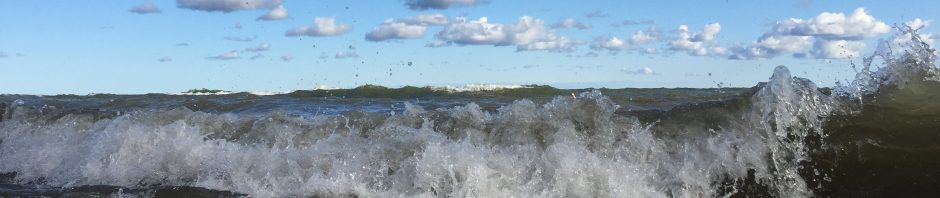
Two or three: Jesus
why are you afraid to be
too alone with me?
______________
#preparingforSundaywithpoetry. This Sunday’s Gospel is full of numbers – no, not of numbers, of people, unalone.
Two or three: Jesus
why are you afraid to be
too alone with me?
______________
#preparingforSundaywithpoetry. This Sunday’s Gospel is full of numbers – no, not of numbers, of people, unalone.
Last week, when Jesus asked his disciples who people said he was, who they said he was, when Simon Peter confessed him as the Christ, the Son of the living God, and Jesus told Simon Peter who he was, the rock. And here, the rock has so soon become a stumbling block, because he wants to deny that the Son of the living God can suffer and die – understandable! But we do not follow a saviour, lean on a saviour who is indifferent to or ignorant of the trials of this world, but rather one who has gone through them so that he can bring us through into new life.
Who we say God is determines who we say we are, who are made in God’s image, who are neighbour is, also made in God’s image. Who we say we are, in turn, has a whole lot of influence over what we do, how we are in the world.
It’s strange that Jesus tells Peter that his mind is stuck on human things rather than the divine. In some ways, it seems as though the opposite applies: Peter is looking for a miracle, a theophany, a deus ex machina to usher in the Messianic age; he doesn’t want Jesus to take the very human road of suffering in body and in spirit that is the symptom of our mortality. Peter wants to skip straight to heaven.
Perhaps the problem is our definition of what is human and what is divine. What if our hope is not only in the heavens – although that is true hope, too. But what it this life, created and sustained and shared by the Son of the living God – is our share in the work of the Divine? What if we were to take seriously the doctrine of creation – not as a substitute for scientific knowledge, mind you, but as a window open to it? What if we remember that God created us to be in relationship with God, to reflect God’s image in our relationship with the rest of creation? What if we owned not only our authority but our responsibility to God, to one another, to creation?
Then we would be with it in the hurting and the harm of climate change. We wouldn’t deny it, or just hope for the best. Those temptations, to find ourselves above it all, or to throw ourselves from the pinnacle of the temple, devil-may-care, and trust that the angels will catch us – Jesus dealt with those, too. And he said, Away with you, Satan. Get behind me.
We will suffer with the planet, grieve with the earth and the oceans. And that is where God is, how Jesus is with us. Not here to escape our humanity but to heal it, to perfect it, and in his commitment to the way of the Cross, we see that humanity is perfected in love, in humility, in the mercy modelled by the Son of the living God. We see that these traits are the image of the divine: that compassion – not turning away, not denying, but bearing with – that the compassion that gave birth to the Incarnation is at the heart of the Divine.
Who we say God is matters. Moses, faced with a burning bush which is yet unconsumed – because our God is a Creator, not a destroyer – Moses asks God for a name, for a divine identity to share with his people. And God answers in the purest, most generous form: I am.
When God says, I am, God says, I am with you. When God says, I am the God of your ancestors, God says, I have always been with you. When Jesus said, I will go to the Cross for you, God with us, Emmanuel, is saying, I am always with you. Through it all, in it all, so that I can bring you through the storm to safe harbour, still waters.
I am who I am – I am God! I am the God who has always been and I am the God who will be with you. Be still, then, child, and know that I am.
This week’s #preparingforSundaywithpoetry perhaps bears more relation to the stories of Jesus’ original temptation than to his twin command to Peter to, “Get behind me, Satan!” But between those threads, and the idea that one could follow Jesus, taking up the cross but not tasting death? – that is where this poem caught me today. I hope it’s still useful to your prayer and preparation for Sunday’s strange interpretation of what is good news.
Savour
Some will not taste death; others
lick it like salt from their skin,
the ones with eyes like atlases.
Flashback to the desert, sand
gritted between teeth and palate,
tongue coated with a sapour that
no vinegar will slake, spitting
drily at the devil, “Go to hell!”
rising like acid with the effort.
Shadows fall crosswise, shifting
and lengthening with the tide
of the sun. In their wings,
angels and wild beasts hover,
patient for the suffering of the saviour.
It has been a horrible weekend for gun violence in America. I cannot keep my heart from going out to the family of the teenager gunned down at a high school football game, while I was listening to the strains of the halftime band drift over from our own local school on Friday evening.
Even so, I confessed God and the congregation during the prayers of the people, in the midst of all of the gun violence of this weekend the Jacksonville shooting stands out for its chilling hatred. Steeped in the blood of past victims and dragging injustice and prejudice with it like a standard, such ugliness pulls us back toward the history we hope so hard to escape.
I prayed, something like, Convert the hearts of this nation, O God. Subvert the forces of racism, hatred, violence, and evil. Help the broken, comfort the grief-stricken, stand close to those who are fearful, break open stony hearts, heal our hope.
Prayer, of course, does not alter the mind of God, who was anti-racist before we invented ways to shatter the image of God into pieces so that we could pick up an individual piece of mirror and call it whole, never mind that it cut us. Rather, I prayed it in order dimly to remember what I once heard God whisper to me: love wholly, trouble the demons, do not repay evil for evil, but overcome evil with good, with God, who alone is good, who alone is holy, who alone is whole.
From the cross we hear the incarnation of a sigh, Forgive them, for they do not know what they are doing.
But don’t we?
A sermon for 27 August 2023, Year A Proper 16: Peter’s confession of the Christ at Caesarea Philippi
I have been to that place in Galilee, now called Banias. There is a wonderful waterfall there, a spring and dance of living water. I didn’t know back then that its name echoes its past. It was once called Paneas, named for Pan, of Greek mythology. Even earlier, the spring would have been associated with the Baals.[i] When the Romans annexed the area, and set up Philip, one of the Herod family, as Tetrarch, he named the place Caesarea Philippi.
It is an apt place for new beginnings. Named and renamed, with Simon Peter’s words the Baals, the gods of Pan and of Rome, the idolatry of empire, all were buried beneath the cataracts, and the name of the living God was spoken over the water, like a baptism.
This is not the first time that the disciples have identified Jesus as the Messiah, their Lord. Out of the storm they called him the Son of God, and they worshipped him (Matthew 14:33). Yet something is different about this moment. As soon as Simon names Jesus as the Christ, the Messiah, Son of the living God, Jesus names him, Peter, the rock, and calls him into his place in the new community of the church that Jesus is building.[ii]
It was like a baptism when Jesus told Simon, “You are Peter,” when he named him and charged him with his place in the church, the church that Jesus himself would build. I do think that it is important to notice that Jesus promises to build the church himself. “This,” says my commentary, “is part of Matthew’s theology of the continuing active presence of Christ in the church.”[iii] Commissioning Simon Peter to undergird the church, to hold the keys, to be faithful and wise in its administration does not mean that Jesus has left the building, has left the building entirely to Peter and us, his spiritual descendants. Jesus is the head of the church, and its cornerstone, and its life. He is present and active, or it is not a church. After all, he is the Son of the living God, not an idol of stone.
That is what caught my attention about this exchange, this time around. When Peter says who Jesus is, in heaven and on earth, Jesus says who Peter is in and to and for the community of that faith.
Who we think Jesus is has a bearing on how we understand our place in the church, our role in the community of faith, and our vocation in the world.
I met the man, Jesus. He asked me who I say he is. I told him, You are the way, the truth, you are life. He said, You are Sophia, which means wisdom. I will cause you curiosity, so that you might make out my mystery and the truth of my salvation to the world.
I met that man, Jesus. He asked me who I say he is. I told him, You are the Word of God. He said, You are Mohadissa, the storyteller. I will lay down my words and you will tell my story to those in need of a song to lift their hearts.
I met some friends who said that they had met a man called Jesus, from Nazareth. I said, “Can anything good come out of Nazareth?” He met me with, “Here is an Israelite in whom there is no deceit!” If I am named Nathanael for the prophet who told truth to King David, he can be no other than the King of Israel. Stranger things have happened, and he tells me stranger things yet will. (John 1:43-51)
Jesus asked me, Who do you say that I am? I said, You are Glory. He said, Then you are Raphael. With you the angels will partner to sing to the highest heavens.
I met a stranger. His hands were scarred, his feet bandaged, he favoured one side with his breath. He said, Foxes have holes, and birds have nests, but the Son of Man has no place to lay his head (Luke 9:58). I told him, Tonight you are my guest (for by doing so some have entertained angels unawares) (Hebrews 13:2). He parted in the morning with an odd blessing: You are Chesed, for a bruised reed you did not break, and a dimly burning wick you did not quench. (Isaiah 42:3)
We met Jesus, and he asked us who we thought he was. We told him, We saw you walking upon the water! You are the vessel of God’s power, the brooding Spirit, the Creating One. He said, You are Shiprah, and you are Puah. You will be the midwives of faith and salvation to my people.
I saw Jesus, and he asked me who I say he is. I told him, You are Emmanuel. You are God with us, the very Incarnation of the Divine. He said, You are Adam, the human one. We are family.
Who do you say Jesus is? Who does he say you are?
I went to Banias as a green teenager because I had heard that it was the place of Peter’s confession of Jesus as the Christ; I had no idea how beautiful it would be. It was bordering against no-man’s-land, the strip of scorched earth that separated us from the rocket launchers that punctuated every night with their explosive lullabies, near the Golan Heights with their watching eyes and suspicious and unsettled borders. I didn’t expect that baptism of living water. I should have known the healing properties of bathing, wallowing in the name of Christ, the Son of the living God, even under the shadow of death, war, and idolatry.
We are his church. He builds us, names us, raises us, sustains us. When we call upon him, when we call him who he is, he tells us who we are, each beloved and called and vital, because we belong to Christ, and to the living God.
[i] https://en.wikipedia.org/wiki/Banias
[ii] The New Interpreter’s Bible, Volume VIII
[iii] The New Interpreter’s Bible, Volume VIII, 345
Year A Proper 16 readings: Exodus 1:8-2:10, Psalm 124, Romans 12:1-8 ,Matthew 16:13-20
The Banias Waterfall in the Golan Heights. Author: Nahum Dam (2004), via wikipedia
They carved the rock as though they
were its creator, hauled its calves
across hills and valleys, raised
them on the plain for centuries
to see and on them build
mists and legends of cyphers
binding and loosing the sun.
Is this pebbled faith I carry
an anchor or a millwheel,
foundation or faltering?
They set a boulder to blot life
from the garden, light from the tomb.
When it was rolled away you spoke
her name into the morning like dew.
Nothing is silent.
The breath of God
is not absent.
The wheeze of trees in full leaf
hefting their branches
in dance.
The sigh of waves
that fall before they reach
the shore.
The call of an ant
six whispery feet one side
of a blade of grass.
The sun raging with fire
far, the moon rattling
as it rotates, all speak.
In the language of prayer,
electric impulses chorus
in harmony.
The Spirit broods
like a shuffling winged thing
settling over the soul.
A sermon for Joseph and his brothers, as well as the rest of us. Year A Proper 15
Forgiveness is a transcendent thing. Mercy, the unlimited and unlimiting grace of God, “For the gifts and the calling of God are irrevocable”; the gift of the Cross, the love of God that surges like a wave through the salvation story, drowning out sin and guilt over and over, washing us clean; these endure.
But this story of Joseph and his brothers, the power dynamics (literally) at play, remind me that while to forgive is divine, we – well, we do our best.
Let me ask it plainly: Would Joseph have forgiven his brothers so completely if they had not been completely beholden to him? Would he have been so magnanimous if he were not dressed in magnificent robes? Remember, a lot has passed since last week when we heard them throw him into a pit and then sell him to passing strangers, passing slave-traders. He has been in a place of privilege and he has been in prison. He has been in chains and he has been in charge. Now, in the midst of a regional famine, he is the one able to feed the multitudes, or to cut them off. He has played with his brothers, sending them away like thieves, tricking them and tearing his father’s heart in two. Joseph, generous, has nevertheless exacted payment for the food he gave them with the power of the puppeteer: payment in panic, payback for the terror he felt in that dry pit when they sold him down the desert. Joseph has been at least, at the very least, as cruel as he was kind to his brothers in this little drama of forgiveness. Even now, while he weeps upon their necks, he holds their fate cradled in his hands. Is that forgiveness, to refrain from retribution?
I commend to you L. William Countryman’s Forgiven and Forgiving. He writes that,
“we are apt to think of forgiveness as a kind of complicated transaction between people that usually involves a good deal of misrepresentation, emotional manipulation, denial, presumption, and outright lying. It becomes a formula to be invoked, an obligation to be fulfilled. Then, afterward, we sometimes wonder why we haven’t really succeeded in turning loose our anger about the past.”[i]
Don’t we see all of that in the melodrama between Joseph and his brothers?
Is it a stretch to wonder whether the secret bitterness that Joseph still harbours in his heart, that plays out in the way that he plays with his brothers as they cross and recross the desert; does his false witness, do his less kind intentions, defile or diminish his forgiveness? Or do they simply show up, as a CT scan of the soul, the scar tissue of the hurt and harm that he has suffered, that which has to be forgiven if family life is to start over in the shadow of Egypt’s grain silos? Some injuries leave a permanent mark. Forgiveness is part of the healing.
There are power dynamics at play here, there are family histories and hurts, all complicate the story of forgiveness that unfolds, and all are present when we wrestle with how to achieve that holy grail of forgiving. It is the burden of being human. For Joseph and his brothers, that drama will continue to play out, in small and subtle ways, for as long as they live together; forgiven and forgiving, none has forgotten what he did nor what was done to him, and the practice of daily forgiveness, the assumption of grace, will be essential to their settling side by side.
It helps that they all have changed almost beyond recognition since that day in the desert. It is not always so.
There are limits to how much of the complexity of human forgiveness and healing that we can cover in a ten-minute sermon. But it would be irresponsible, too, not to name those obstacles to forgiveness that exist in abusive relationships and patterns, whether those are personal and domestic, or social and systemic. Forgiveness should change us – all of us. God’s forgiveness does change us. It transforms a fallen humanity into one that can look up from the ground, where Abel’s blood is crying out, where Joseph wails up from the pit, and know that God still loves us, that God wants better for us than this.
Forgiveness heals harm. It does not help to perpetuate it. In relationships, systems, patterns of abuse where nothing is changing, the first step to forgiveness may be to tell the truth about the ongoing harm, to hear Abel’s blood crying out from the ground, Joseph from the pit, and to refuse to cover up the crime or cover our ears. God heard them. God hears us.
If, as the adage goes, to forgive is divine, then forgiveness is clear-sighted, it creates good and does not condone evil, it is creative and transformative and it tells the truth. It brings close the kingdom of heaven, in which there is room for all people, but not for any form of abuse.
If to forgive is divine, then to live a forgiving life is partnering with God to create new and better ways of being. It means that when we pray, “Forgive us our trespasses, as we forgive others”, we acknowledge that this is part and parcel of “Thy kingdom come”: a world in which healing interrupts the currents of harm and remembers the love of God that is for all.[ii] It is transcendent.
It is not easy, it is often complicated by power dynamics, personal, social, and family histories, scar tissue, and, let’s face it, the very real fear of further harm. But to return to Countryman’s book once more, he concludes, “Love is the powerful attraction that the all-powerful God uses to draw us into relationship with our creator – and with one another. … Forgiveness merely shows the depth and strength of this love, which is not deflected even by repeated failure nor exhausted even by repeated rejection.
Only the strong can forgive. God, who is strongest, forgives best. But we have been invited to become members of God’s household, sharers in God’s wisdom and knowledge, people strong with God’s strength and generosity. We too, can join in the infinite exchange of love and forgiveness that opens the door to the future.”[iii]
In those moments of inspiration, of prayer, of grace when we remember God’s forgiveness, that is supreme, and all-encompassing, and perpetual, and healing; when we find ourselves caught up in the salvation story instead of our own, when we remember that to forgive is divine; then, when we know ourselves to be forgiven, as God forgives us, then any future is possible, even the one where love really does win.
[i] L. William Countryman, Forgiven and Forgiving (Morehouse Publishing, 1998), 11
[ii] See Countryman, 42-44
[iii] Countryman, 131
Readings: Genesis 45:1-15, Psalm 133, Romans 11:1-2a, 29-32, Matthew 15: (10-20), 21-28
Do you remember how,
in the parable,
he paid them, last and first?
To the first he was fair,
but to the last he was
magnificent.
Neither knew
whether to laugh or shout
or fall to their knees;
so we, too,
swayed between the thirsty
and the relieved,
envying and blaming
each in turn …
So too, at last,
he spoke glory
to whom he first served silence
more merciful
than his passing
words, and she,
risen lately from her Baals
and run with twisted tongue
to the Son of David,
was buried by the weight
of faith worth its salt
and borne again;
and we stumble to understand
her meaning
This Sunday’s Gospel includes the challenging story of the Canaanite woman who comes seeking healing for her daughter, “crumbs under the children’s table,” whom Jesus seems at first to reject, but whose faith he then praises with healing power.
Featured image: Bowyer Bible Print. The Syro-Phoenician Woman. Jan Luyken. wikimediacommons
A sermon for 13th August, 2023; Year A Proper 14.
Once upon a time, some forty+ years ago, an academic who was not a mathematician did some wage review for the civil service, and accidentally became responsible for the teachers of England and Wales receiving a well-deserved but rather unexpected – on all sides – pay boost. That is how my father ended up buying a boat.
It was a small boat, with a very small outboard motor. Did you know that the Bristol Channel, that little strip of salt water between England and Wales, has the second largest tidal drop in the entire world, second only to somewhere up north of here (Canada? Alaska?)? Having been in a very small boat with a very, very small outboard motor, boat-surfing around Lavernock Point in a foolhardy effort to get home ahead of the tidal turn, swamped by waves that I worked ravenously to put back into the Channel using a very small bucket, I can believe it. My father tells the story of one such outing; when we finally got back to dry land, he asked me, “Were you scared?” With as much teenaged bile and bravado as I could muster, I replied, “Scared? I was too busy bailing out!”
I know who I am in this morning’s Gospel story. If I had seen Jesus walking towards us on the water from Flatholme, I would have thought he was a ghost, too, because I would have assumed at that point that I was a ghost.
Evening had come and gone, and it was already the dead of night. Wind and the waves were battering the boat; if there was a moon it was obscured by the spray. The elements were against them, and they knew themselves no match for the chaos.
Then came Jesus. Then came Jesus, descending the mountain on a cloud of prayer, drifting across the sea like a breath, like an angel, like a ghost. Then came Jesus, and he said to them, “Take heart, it is I. Do not be afraid.” (Matthew 14:27)
There is a theological aspect to this story, of course. It speaks not only to what happened, what Jesus did out there in the dark and the storm, but it speaks, he speaks of who he is. “Take heart, it is I. Do not be afraid.”
In the beginning, when the world was formless and void, the authors of Genesis imagine a storm of oily water, suffocating and chaotic, devoid of life, empty of breath, but full of chaos. Then came the Word of God, speaking light, speaking land, speaking heavens and earth and ocean, speaking life. (Genesis 1)
When Jesus treads upon the storm, he reminds his disciples, he reminds us, that he is that Word of God that quells any force that mitigates against life, against light, against hope. The commentaries tell us that walking on water is a feat reserved to the divine; it is a quelling of the chaos, a subjugation of the elements that belongs only to the Creator of all things.[i] Jesus, coming to his disciples on the sea, was showing them who he was, who he is. The wind and the waves may have been against them, but Jesus says, “Take heart, it is I.” No one, nothing can stand against the love of God made manifest and standing before them, in the heart of the storm.
“Do not be afraid,” he tells them, because perfect love casts out fear, and he is the perfect love of God. “Do not be afraid,” speaks Emmanuel; “I am with you.”
In the midst of the storm, or facing down the wildfire, in the deep pit, in the wake of bitter betrayal, after the scary diagnosis, even when planning the funeral, the question arises, “But what of it?” The text does not tell us that the wind and the waves subsided when Jesus made himself known – this is not the same story as the, “Peace, be still!” moment. No, but Peter says, “If you call me, I can come to you on the water.” And when he starts to sink back in fear, Jesus catches him. (Matthew 14:28-31)
I know who I am in this story. Sometimes I think I only went out in that ridiculous boat on the Bristol Channel because no one else would, and I didn’t want the man to die alone, and I hope that counts for something. I am hoping for courage but my heart is sinking. I am too busy bailing out the boat to pray. The wind and the waves are against me, I am underpowered and overwhelmed, and as much as I want to keep my attention fixed on Jesus, the storm is stealing it, and sinking me. That’s just how it goes, sometimes.
But I know who Jesus is, too. When he says, “Take heart, have courage” – because courage is heart, encouragement is the giving of one’s heart, votre coeur, to another – when Jesus says, “Take heart, it is I,” he is not saying, “Be brave. Man up!” Rather, he is offering his heart, himself, his courage, his power, his love and mercy, his life to his disciples. He will not leave them to face the storm, the fire, the flood, the betrayal, alone. And when he does get in the boat, the wind drops immediately, like the others, falling down in worship before him.
From the very early centuries of the church, our prayers have included the Sursum Corda: Lift up your hearts; we lift them to the Lord. The original said simply, “Up with your hearts.” “We have them with the Lord,” was the response.[ii] As we come to celebrate and commemorate and rely on Christ’s presence with us, we begin by taking heart, taking encouragement, that his heart is with us; and we place our hearts with his.
So take heart, whatever the storm, whatever is against you, whatever has you sick or afraid or wanting to walk on water; take heart, Jesus is with you. Even when we are distracted and rightly dismayed, he is already reaching for us to pull us back from the abyss. Nothing, no distance nor elements nor trouble can keep him from you. Indeed, “The word is near you, on your lips and in your heart.” (Romans 10:8)
Amen.
[i] The New Interpreter’s Bible, Volume III, pp. 326-330
[ii] Prayers of the Eucharist: Early and Reformed: Texts translated and edited with commentary, R.C.D. Jasper and G.J. Cuming, third edition (The Liturgical Press, 1990), 31-38
Year A Proper 14: Genesis 37:1-4,12-28 (Joseph’s is sold into slavery by his brothers); Psalm 105, Romans 10:5-15 (“the word is very near you”), Matthew 14:22-33