A homily for Evensong at Trinity Cathedral, Cleveland, Ohio
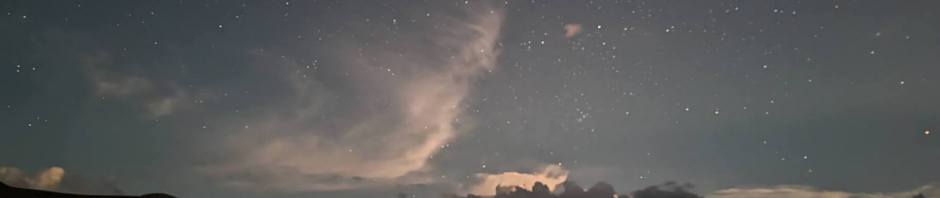
If there were no space between the stars, we would not know their light. They shine in our vision, twinkle on our retinas, because they are set against a velvet jewelers cloth of midnight and the occasional occlusion of a cloud.
The Light of the World came into a world that did not recognize him among the jostle and hustle of human birth, rejoicing, suffering, and death. But from the distance of time, we see him shine like one transfigured on the mountaintop, and against the shadowed backdrop of the empty grave, even those closest to him could not miss the brush-strokes of glory.
Lucy, in mid-winter, light in the darkening days, stretches herself toward the Light that will not be extinguished, nor overcome. I learned at school from the poet and priest John Donne that Lucy’s was the shortest day of the northern year; “the year’s midnight.” But that was before the calendar was changed and Lucy’s day gained eight grains of extra time between the darkness before dawn and the gathering of nightfall; now, she sits at the cusp of the yeares midnight, a week’s waning before the longest night. When the calendar was changed, and the days shifted, there were riots. Never mind the light that Lucy gained; the people had lost eleven days, and they were astonished and outraged that such a thing could happen. I suppose if one of them were your birthday you would be rightfully aggrieved. What they did not recognize is that whatever names and numbers we put to the days, the stars do not follow our designs, but we their dance, and that we cannot contain the turning of the world. Midnight will come, and dawn will follow. The Light of the World cannot be suppressed.
Change is not an easy thing, even for the enlightened. It always involves loss. I say this knowing that in the background of this evening, in the shadow of the candles and the glorious lightness of music lifted up to heaven, we are a little maudlin with the knowledge that when we return next spring, our beloved Todd Wilson will be making music elsewhere. I am not about to riot, but I’ll admit to feeling a little salty about it. But I remind myself not only that I should celebrate his new beginnings, new dawns, new shoots; not only that I should be grateful for the many times we have worshipped together over the years; but that all light, all music, all prayer comes from the same source and will comingle on its way back to heaven; we will still be singing together, in a sense, wherever we are making prayer out of music. Seen from above, from a distance, the lights of a city become one: one symphony, one score of grace notes and sustaining harmony.
We don’t know a lot about Lucy of Syracuse, the Sicilian martyr of long ago. We see her dimly through the clouds of time, yet the way in which her day on our calendar stretches toward the light that is to come continues to illuminate us.
We have seen enough of shadows this year to make us shudder. In the land of Jesus’ birth, chaos appears to reign. In Bethlehem this season, the manger scene is surrounded, almost buried, by the rubble of war. There are no festival lights, no tree or markets in the square outside the Christmas church; only the kind of sombre silence that accompanies the empty seat at the family table; the silence of search and rescue crews; the kind of silence that hopes valiantly to find signs of life beneath the architecture of death. I was reminded today, though, of a quote from the late and gracious Archbishop Desmond Tutu: “Hope is being able to see that there is light despite all of the darkness.”
There is a legend that – and pardon me, this is a bit gruesome – there is a legend that Saint Lucy’s eyes were put out before her martyrdom, and that her sight was nevertheless miraculously restored. We know that our vision is an interpretation of the light that surrounds us; I imagine that her vision was able to return because she saw the Light of the World, because she had drawn close enough that Christ’s light could not be extinguished within her.
I think of the long aperture of a camera taking pictures of the night; instant to instant, our eyes see only the tiniest pinpricks in the darkness, but left open to the sky, the camera is able to absorb and interpret those tiny messages into images of great light and beauty; images of hope.
Lucy, whose name means “light”, was not herself the Light, but Christ’s light filled her so that nothing, not even those torturers and persecutors, could touch her vision of him. Her memory no longer illuminates the longest night of the year, but accompanies us steadfastly into that darkness. While we continue through the ages to face changes and challenges, loss and life, sparks of hope and anxious moments, her legend reminds us that we have seen the changeless and unextinguishable Light, which shines in the darkness; that come what may, the darkness has not, and will never, overcome it.
Featured image: Great Sand Dunes National Park & Preserve (Dark Sky Preserve), courtesy of Edward Hughes


 over the water
Lovely. Thank you