Jesus was a good teacher. He himself knew what he was going to do to feed the crowds before him, but first he asked Philip, “What would you do?” He invited Philip, and the others in class, to consider for themselves how to engage with the work of feeding the flock – because this is the same crowd as we encountered last week, upon whom Jesus had compassion, because they were as sheep without a shepherd (Mark 6:30-34).
Later, after he was risen from the dead, Jesus at breakfast on the beach with these same disciples would tell Peter, “Feed my sheep.” (John 21:15-17) Today, the lesson begins: Feed these people, the ones before us, the ones gathered around us.
Jesus knew what he was going to do. First, he gave thanks to God for the abundance of God’s grace upon him and among them, for God’s providence in the world of all that we need to live and to grow and to know God’s presence with us, feeding us, sustaining us. Having given thanks for what he had, instead of worrying about what he lacked, he began to distribute the bread and the fish.
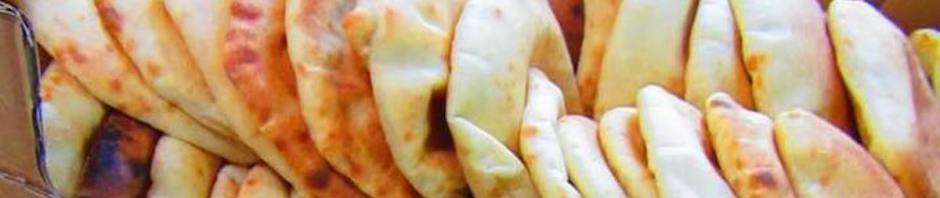
You know that if you divide a loaf of bread in half, and then in half again, and then in half again, that sequence can go on into infinity; but you will very quickly find yourself in the realm of invisible crumbs. This is not what happened on that lakeside. This was not a division but a multiplication. It was, after all, a miracle; but it was a miracle whose purpose was not only to fill the bellies of the crowd, who would not suffer terribly if they went hungry for just one night. It was a miracle designed to demonstrate the abundance of God’s providence, the wideness of God’s mercy, the tenderness of God’s faithful loving-kindness.
I love that there were left-overs. I love that Jesus told his disciples to gather up every last crumb so that nothing would be wasted. There was enough bread and fish to feed five thousand and more people, with plenty to spare – and he would not allow a morsel of God’s mercy to be wasted. Rather, it would be used up and consumed and allowed to continue the work of reminding all who received it of the abundance of God’s faithful loving-kindness.
Whenever they ate it, they would remember.
We gather at the table and we remember, in the bread and in the cup, the overflowing mercies of God and how they have sustained us and continue to provoke us to share the blessing, to proclaim good news to those in sore need of it, to recommend the faithful loving-kindness of God to a world that has become, too often, cruel.
Sometimes, we wonder how we will make it happen, whether we can really make a difference in a big world from our small place in it. Six months’ wages, we cry with Philip, would be a drop in the ocean of need.
Sometimes, we want Jesus to overrule our enemies and solve our crises and mandate the mercy of God on those whom we would have mercy, at least.
The people tried to make Jesus king; did you know that five thousand is the number of soldiers in a Roman legion? The people wanted Jesus to take charge of an army and impose his rule over the empire – they knew he could do it better. But Jesus instead slipped away to pray. He knew that there was another way to save the world; the way of love.
He asked his disciples, he asks us, what will you do about it? How will you remember God’s mercy, recommend God’s faithful loving-kindness to a world that fights over power and authority as though it were the answer. Elsewhere, he tells his disciples, the Gentiles lord it over one another, but you are called to serve.
To feed my sheep.
Like a good teacher, Jesus leads his disciples toward the answer by example. He gives thanks to God for all that is, for all that will be; he has faith that God is good, that God will provide what is necessary and more. He takes care of the abundant resources that God provides: he will not waste a crumb leftover, but gathers them up so that they can continue the good work once begun. He will not be distracted by ego nor by power but he withdraws instead to pray, to centre himself repeatedly in the relationship he has with God. Notice how this miracle begins and ends in prayer. Without it, we can do little.
And notice, too, how Jesus does not divide the bread and the fish but allows them to multiply. How he refuses the mathematical draw down to infinity, but challenges our understanding of how the world works with the alternative reality of grace. It is a miracle, and it is the reality of God’s relationship with the world, with us, that the grace and love of God cannot be divided up but only shared out.
We live in a world, in a country and a community, hungry for love, starving for mercy, thirsty for good news. We have all that is needed to provide those essential nutrients to the people before us, around us, among us. And that is exactly where Jesus asks us to begin.
Day by day, week by week, he provides the reminder in the bread and the cup and the prayers, not divided but shared between us, of the faithful abundance of God’s loving-kindness. And he asks us, What will you do?
Now to him who by the power at work within us is able to accomplish abundantly far more than all we can ask or imagine, to him be glory in the church and in Christ Jesus to all generations, forever and ever. Amen. (Ephesians 3:20-21)


 over the water