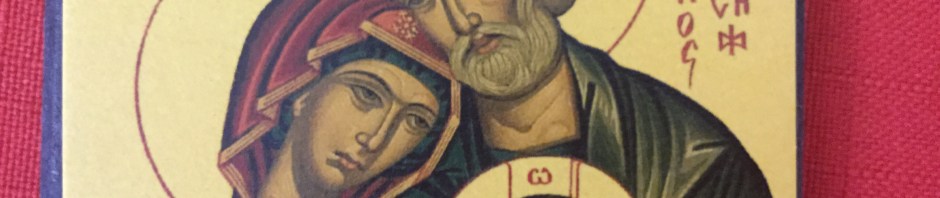
Either the angel knew more than they were telling, and were sparing Mary’s feelings for the moment, or perhaps Gabriel really only saw the glory of the coming Christ, the throne, the kingdom, the eternal hope. Because when Jesus is described, that is all that Gabriel reveals. Only the glory. There is no mention of the trials to come, the betrayal, the temptations, the execution. Perhaps Gabriel was afraid that Mary would say no, if she knew how hard it would be to mother the love of God into and out of this world.
But I think that the angel, not being human, nor able to become a parent, or a lover, or a child, underestimated Mary. I don’t think that Gabriel understood the power of love to will into being a child, or any relationship, even knowing the risk of grief, the incomprehensibility of loss. Anyone who has loved can recognize that risk, the pain that follows us even through our moments of greatest joy. Yet we love anyway, and send our hearts into impossible places, into the lives and loves of others, because we have heard that with God nothing is impossible.
You know that our parish family suffered an impossible loss this week. It is untenable, and unbearable so close the celebration of Christmas and incarnation. And yet it is out of grief that we turn to God, and in our sorrow that we seek consolation among the angels and saints. We look to Mary for empathy; you know, favoured one, how dangerous love is, and still you said yes to God, yes to life, yes to Christ. Because it is only with God that nothing is impossible. It is in Jesus that we see resurrection. We see that life, his life, our life goes on.
When Gabriel came to Mary to suggest or announce the impossible, she didn’t ask, how will I survive this? What will people say? How will my body endure the pain, my heart the anguish of a labour of love? Perhaps because she knew already that it is impossible to know in advance of love how hard it will hit us, in advance of grief how low it will bring us. But with God, nothing is impossible. Despite our mortality, in love we see glimpses of heaven. Despite our knowledge of grief, we risk joy for the sake of it.
Despite Gabriel’s perplexing announcement, I do not think that in the days of his gestation and infancy Mary (nor, for that matter, Joseph) thought too much about greatness, or thrones, or kingdoms. I imagine that she was more taken with toes and fingers and flutters and feeding and the utter exhaustion of sleepless nights and colic, his and hers, and the utter joy of a baby’s smile. Gabriel could have saved their breath (provided, that is, that angels breathe). The angel didn’t need to oversell the child, the mundanity of human love, which is become the love of God made manifest, evidence that God loves us despite the risk, despite our sin, despite our pain, because God delights in us, because God is love.
Perhaps the angel didn’t know, or perhaps they didn’t want to look too far ahead, or perhaps they were protecting Mary’s heart for as long as they could. But Mary knew already what love is, what love can be, what life gives and what it takes away from us. She knew that the Author and Source of that life is to be trusted. For with God nothing is impossible, even the unbearable.
Let it be, then, she said. Let it be.


 over the water