The grand histories of the world tell of kings and empresses, governors and battles, wars and conquests. We talk about the Victorian era, as though she were queen of the world. We talk about who was president when this or that happened, to contextualize ourselves among famous or infamous events. Even within the church, we look to the seats of power to define our times: archbishops, popes, presiding bishops and primates. We live under the shadow of the kinds of names that Luke throws out and writes down: Tiberius, Herod, Lysanias, Caiaphas; the names that appear in the papers: Trump, Biden, DeWine, Francis, Welby.
But is this really where history is made? I am indebted to a colleague for the timely reminder that while Luke is careful, as a historian, to add that context and name those names, Luke the evangelist pivots immediately away from those seats of power into the wilderness, where John, son of a backwater priest from the hill country, clothed in camel hair and the Holy Spirit, is proclaiming the coming of Christ.
It is here, in the wilderness, that the real action is happening, where ancient prophesies are fulfilling themselves, coming to life.
I wonder if John ever worried that his voice was not strong enough, would not carry far enough, was not close enough to the megaphone of worldly power structures to make a difference. If he thought, What am I doing here, by the river, when I could be in the Temple, taking my turn as my father did, to oversee the incense and meet with archangels? I wonder if John ever wondered, at the end of another long day, wringing out his camel hair coat and watching the sun set behind the hill of Jerusalem, whether he was making any difference at all.
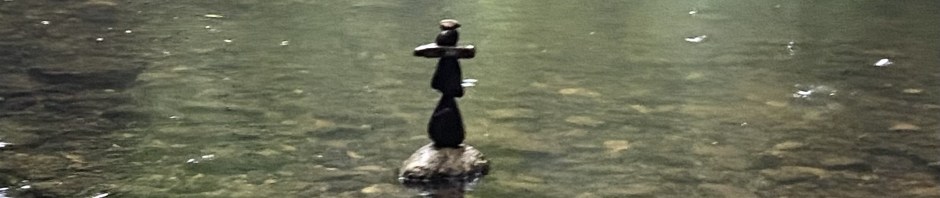
But it is not proximity to the palace that makes for power: it is closeness to God, the drawing near of Jesus, the clothing of the Holy Spirit. It is his faithfulness, faith in the wilderness, listening in the silent, secret spaces, immersing himself in a river of prayer that makes John a prophet.
And what he prophesies to the people who will hear him is that Messiah, Jesus is coming.
Here he is, the voice of one crying out in the wilderness, Make a way in the crooked and rocky places for the coming of the salvation of our God.
Here’s a funny thing about road building. The Bills that order the infrastructure, raise the money through taxes and tariffs, the bodies that cut the ceremonial ribbons tend to bear the names of the politicians and power-mongers that end up in the history books. But the people who build the roads, who clear the land, who pour hot tar and heavy cement, who stand beside the speeding semis and sway in their after-draught: these are not people whose names are in the history books. These are not people whose names are on the overhead signs or the radio traffic reports. These peoples’ names are sometimes not written down at all. They are, to borrow a term, undocumented.
But drive down any highway and dare to say that they are unimportant, or that we have no need of them, that we do not depend upon them as partners in the work of the world.
This doesn’t mean that who holds the reins of political power doesn’t matter. Luke, the historian, is careful to name them. The systems that govern our lives together do affect our health, the health of body and of spirit and of the body political. The systems of government can help or harm the planet and its people, can propagate systems of mutual understanding or affliction. They bear our attention. And (spoiler alert) we’ll hear more from John the prophet about the ethical implications of all of that next Sunday.
But, Luke shows us, what we document, what we record, whom we remember is a choice. It is a choice that reflects what we consider to be important. Luke recognizes the culture of a world that requires context, but he also sees where God is at work in the wilderness, in the oddball person of faith standing in a river of prayer. He pivots quickly from the traditional seats of power because he sees, too, the one making a way out of rocks and rifts and building bridges where none seemed possible. Because Luke has seen Christ coming, and he knows that all manner of heaven is about to break loose.
And you don’t have to have your name in the papers or up in lights to be a part of it. All you need in the wilderness, in the wild, wild west, in this barren and broken world is love. The love of God that flows like a river through the parched places and restores them. The love of God that can move mountains and fill in valleys of shades and shadows. The love of God that does not discriminate between the famous, the infamous, and the forlorn, and the forgotten.
All you need is the courage to step into that river of prayer, and let the currents of God’s love sweep you off your feet, until the kingdom come.


 over the water