It’s not about the money – or at least, it’s not only about the money. It’s about everything that the money represents.
As I have said before when considering this text,[i] money buys prestige, reputation, name recognition. How many impoverished famous people can you name? How many billionaires? Money buys airtime, advertising. Money raises profiles, puts faces in front of the public. Money talks. Money buys privilege, which means, literally, private law. You have heard it said that there is one rule for the rich, and another for the rest. Maybe a democratic society tries to close the gap, but we know that if we were in trouble, we would do better if we had money to bail ourselves out, buy ourselves sound legal advice. Money brings privilege. Money buys influence. It buys access to the people of power; it buys their attention. A word or two at a fundraising event. Money is a lever to move the world.
So no, it’s not just about the money. It’s about that young man having to tell his father and his mother that he no longer wants to take over the family business, that it’s not going to be as all-consuming for him as it was for them, that he wants something better, something more. It’s about telling his friends that he won’t be coming to dinner on the town Thursday night because he’s going to be volunteering down at the soup kitchen instead. It’s about suffering their jeers and their mutterings as he walks away from the hedonistic playground of the rich and the famous. It’s about risking shedding the protections of privilege and walking around in his own skin. It’s about a whole new way of life, and it’s going to hurt, not only his pocketbook. He has to ask himself, is Jesus worth it?
Jesus looked at him and loved him. That’s the line. That’s the hook. That’s the promise: Jesus looked at him and loved him. Jesus didn’t want to destroy the young man’s life. He wanted to show him something better, something deeper, something more. He wanted to show him the love of God.
A colleague asked earlier this week, what’s your one thing? What is the one thing that keeps you from going all in with Jesus? What is it I need to let go of, with all of its baggage and weight and freight, if I am going to travel with Jesus?
It may be something tangible, like money or overly-prized possessions. It may be an addiction to something that is diverting our love away from its proper source and end. It may be more elusive, like the culture of busyness and time poverty that keeps us from spending time with the one who loved us into being and who loves us through eternity. It may be the mask that we wear in order to appear to ourselves and to the world as though we were self-sufficient, as though we didn’t need saving. It may be something we need God to take for us: some grief or pain that we need healing from in order to see past it.
Whatever it is, whatever we are relying on to save us, to make us good, or good enough – if it is not the love of God, it is not good, it is not enough, for no one is good but God alone, says Jesus.
Jesus looks at each of us, you, me, and loves us. That’s the line. That’s the hook. That’s the promise.
I went to a wedding yesterday. Two young women made promises that can’t possibly be kept without giving something up, whether it’s the upper hand in an argument or the need to know that everything will be alright. Promises that cannot be kept except through the grace of love, through the mercy of God, with the support of a loving community.
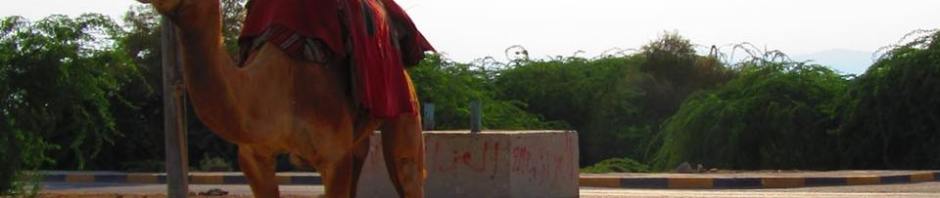
It is harder for a camel to pass through the eye of a needle – yet God shrank Godself into a human body, a human soul, a human being, in order to reach us. It is harder for a camel to pass through the eye of a needle – yet God reaches through the eye of the storm to grasp our hands and pull us through. It is harder for the camel to pass through the eye of a needle, yet Jesus looked that young man in the eye, and he loved him.
The young man is trying to be good enough for Jesus, without giving away the farm, and the disciples worry whether they have done enough, given away enough to follow Jesus, but Jesus tells them that all they have to do, all they need to know is that God is good, and that God loves them. To trust in that love instead of in the powers and privileges of a corrupt and sinful generation.
What is it that keeps us from living in the skin that God created us in, living into the love into whose mould God poured us, living into the intimacy with which Jesus looks at us, and loves us?
Is it worth it?
[i] https://rosalindhughes.com/2012/10/14/year-b-proper-23-sermon/


 over the water